
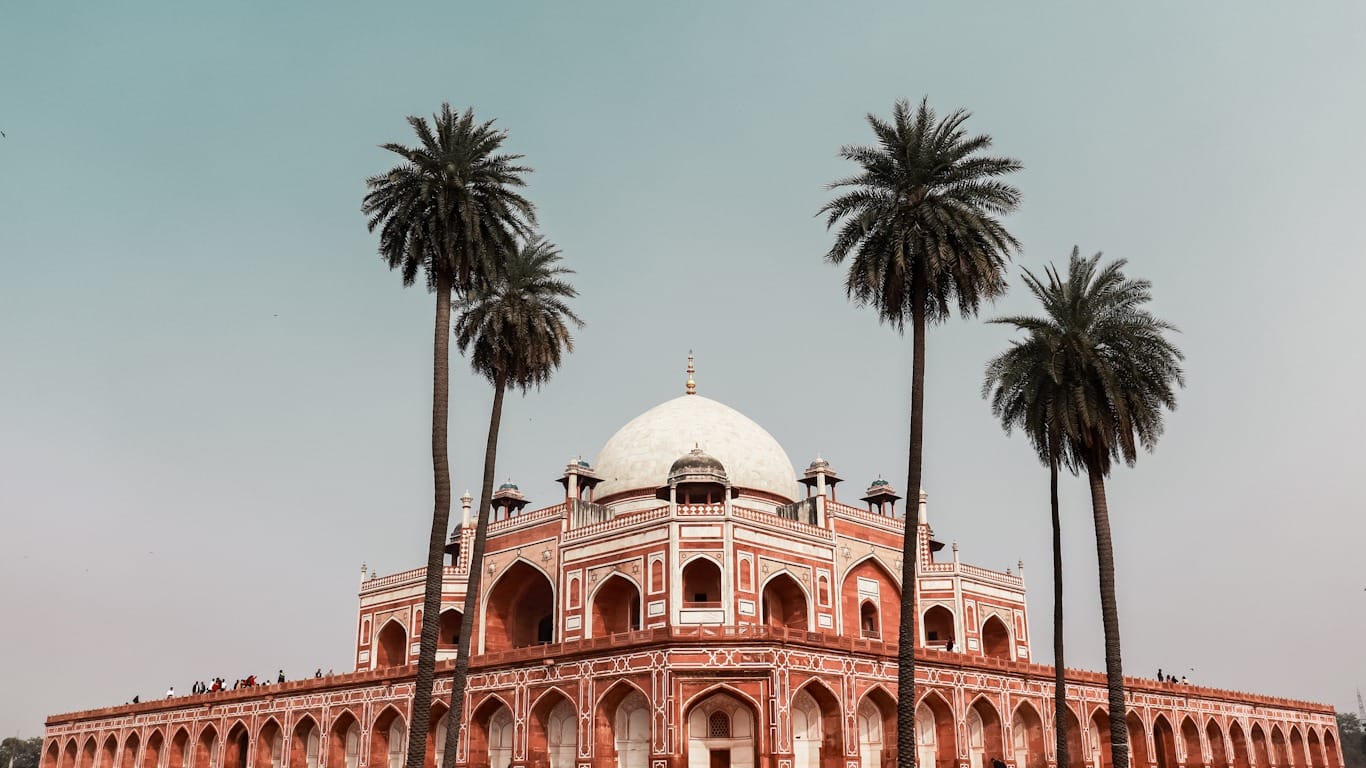
Humayun's Tomb is one of the most representative works of the Mughal Empire and one of the places you can not miss on your visit to the capital of India.
History of Humayun's Tomb
As you might imagine... this impressive funerary work was built for the remains of Humayun, the second Mughal emperor, after his death. Hamida Banu Begum, his main wife and Akbar's mother, commissioned this architectural marvel for the remains of her beloved to rest in a real palace and supervised the details of the construction of the mausoleum meticulously.
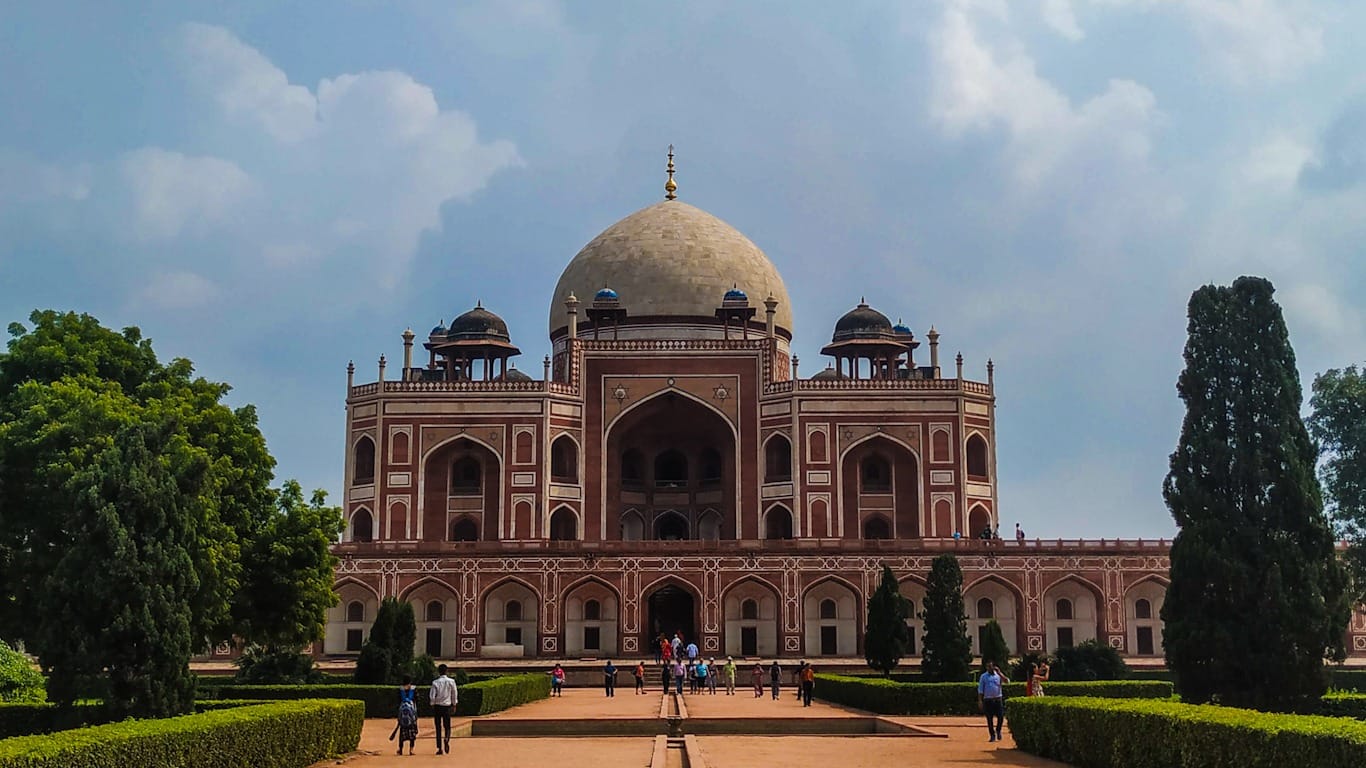
At that time there were tombs located in gardens, but this was the first one called garden tomb and it is the first one in the world. It's considered the forerunner of the Taj Mahal design model. For the first time the structure and design of the garden were part of the construction and symbolism of a mausoleum. The garden is divided into 4 sections and the mausoleum is located in the center of them. Each section of the garden is in turn divided into 4 more sections. The divisions between the gardens are formed by walkways and ditches. If you want to know more about the symbology behind this design, I recommend you to read the article on the Taj Mahal where I explain it in detail.
For its construction, which lasted 7 years and was completed in 1572, red sandstone combined with black and white marble inlays was used.
Funerary complex
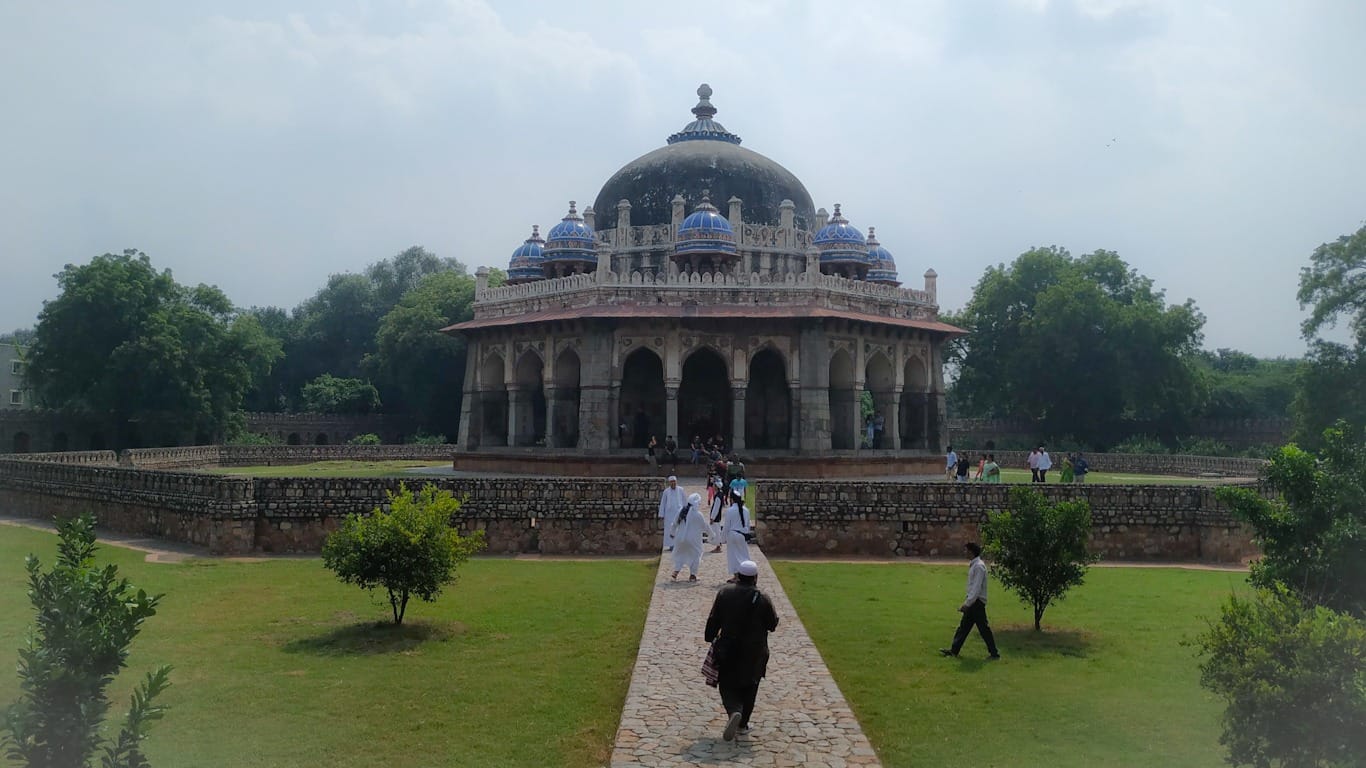
Years later other tombs of influential people of the Mughal Empire were built on the grounds adjacent to Humayun's mausoleum. In addition the last emperor Bhadur Shah II, took refuge in the complex until he was captured by the British in 1857. Today it is a complex with several tombs and large gardens. If you have time I recommend you to visit also the Tomb of Isa Khan 🙂
Restoration of the Tomb
The tomb of Humayun is called UNESCO World Heritage Site since 1993. Between 1999 and 2003 there was a restoration project of both the mausoleum and gardens that cost 65,000$. They brought back to life this important jewel of the Mughal Empire by planting 2000 trees, creating a water circulation system for the canals and refurbishing the canals that had been removed during the British invasion.
Visiting Humayun's Tomb in New Delhi
You can visit the mausoleum inside and take pictures. You can also visit other tombs in the complex and enjoy a walk through its gardens and even sit on a bench to enjoy the peace and beauty of the place.
When to visit the Mogul Tomb
It can be visited at any time of the year, although I warn you that in the months of May to June in Delhi it is very hot and the humidity level is high.
Regarding the time of day, I like to visit it with the light of dawn or at noon, but any time is good to enjoy this red sandstone wonder.
How to get to Humayun's Tomb
To reach by metro: the nearest station is JLN Stadium (purple line). It is at a distance of 1.9km so the most practical way is to take a tuk tuk or cab from there.
To arrive by train: the nearest train station is Hazrat Nizamuddin. It is at a distance of 2.3km so I recommend a tuk tuk or cab from there.
Another option is to take a cab or tuk tuk directly with the Ola Cabs App from your location.
Practical information about Humayun's Tomb
Schedule: from dawn to dusk, every day of the week.
Price: 550INR.
Camera & video: If you want to make VIDEOS you will have to pay 25 INR more.
Food & beverages: are not allowed in the complex.
What to bring: comfortable clothing and footwear as the complex is quite large, a hat to protect you from the sun and mosquito repellent, and don't forget your camera or cell phone!
Guided tour: guides are always available at the entrance and for a small fee you can learn more about the history of the place.
Tips: don't go in a hurry, get lost in the gardens, visit other tombs and discover corners full of history.
I trust that this article about Humayun's Tomb be useful for you and enjoy your visit to the fullest 🙂

Leave a Reply