
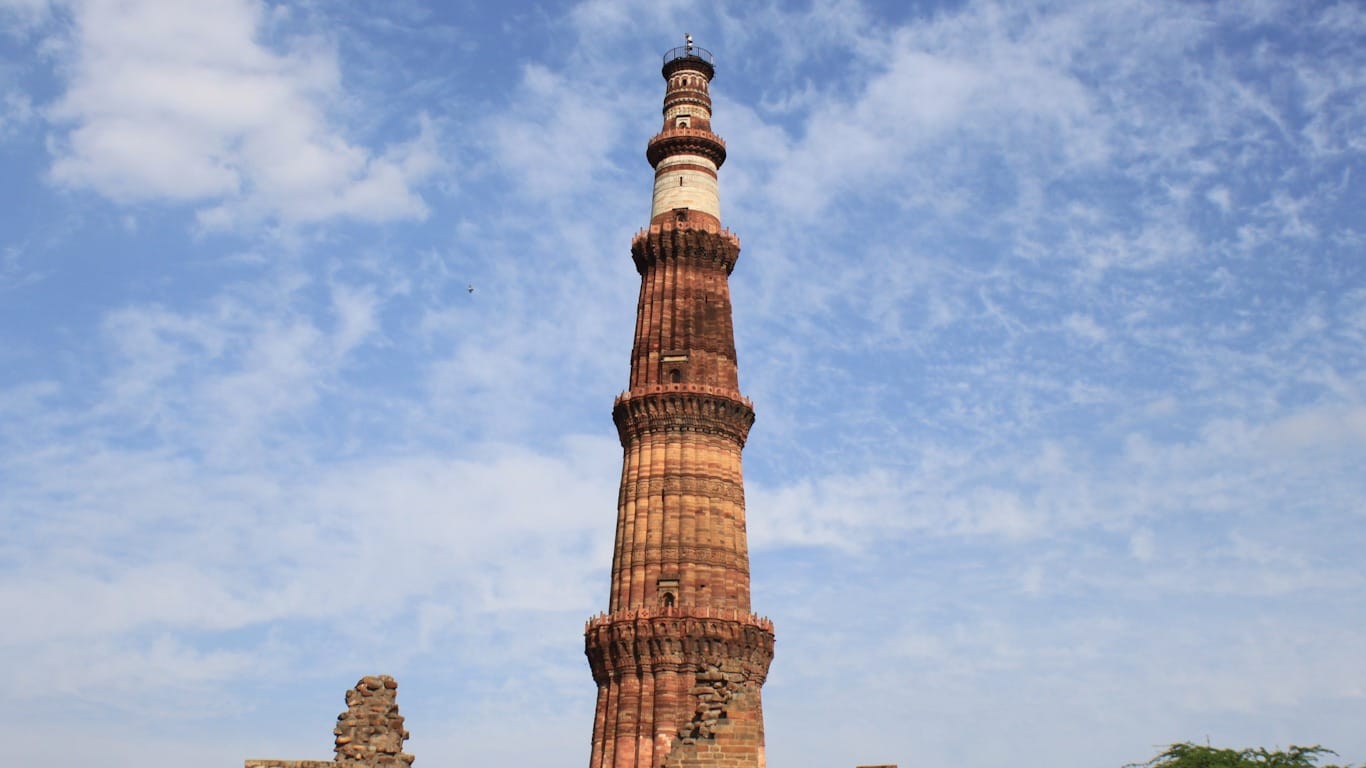
Did you know that the Qutub Minar is the tallest brick minaret in the world? That's right, and currently one of the favorite sights in the capital of India.
History of the Qutub Minar
The Qutub Minar is the oldest islamic monument in Delhi and it is the tallest brick minaret in the world
The minaret was built in the 13th century in the district of Mehrauli, one of the 7 ancient cities that formed the current state of Delhi. It has a height of 72.5m and a diameter of 14.32m at the base and 2.75m at the top. This architectural work of Indo-Islamic style has 379 stairs inside the minaret to reach the top.
Its construction
Qutb-ud-Din Aibak began the construction in 1199 to celebrate the victory of the settlement in the city of Delhi and the fall of the Hindu empire. In addition with this construction he wanted to show the importance of religion in his dynasty. From the minaret the call to prayer in the mosque was made. He was only able to complete the base of the minaret because he died. He also built the first mosque in India called Quwwat-ul Islam or "Power of Islam".
His successor, Shams-ud-Din Itutmish, continued the work by adding 3 more floors. Each floor was surrounded by a balcony and its exterior was carved with verses from the Koran.
Years later, Firoz Shah restored the minaret after it was damaged by lightning and added two upper floors of white marble.
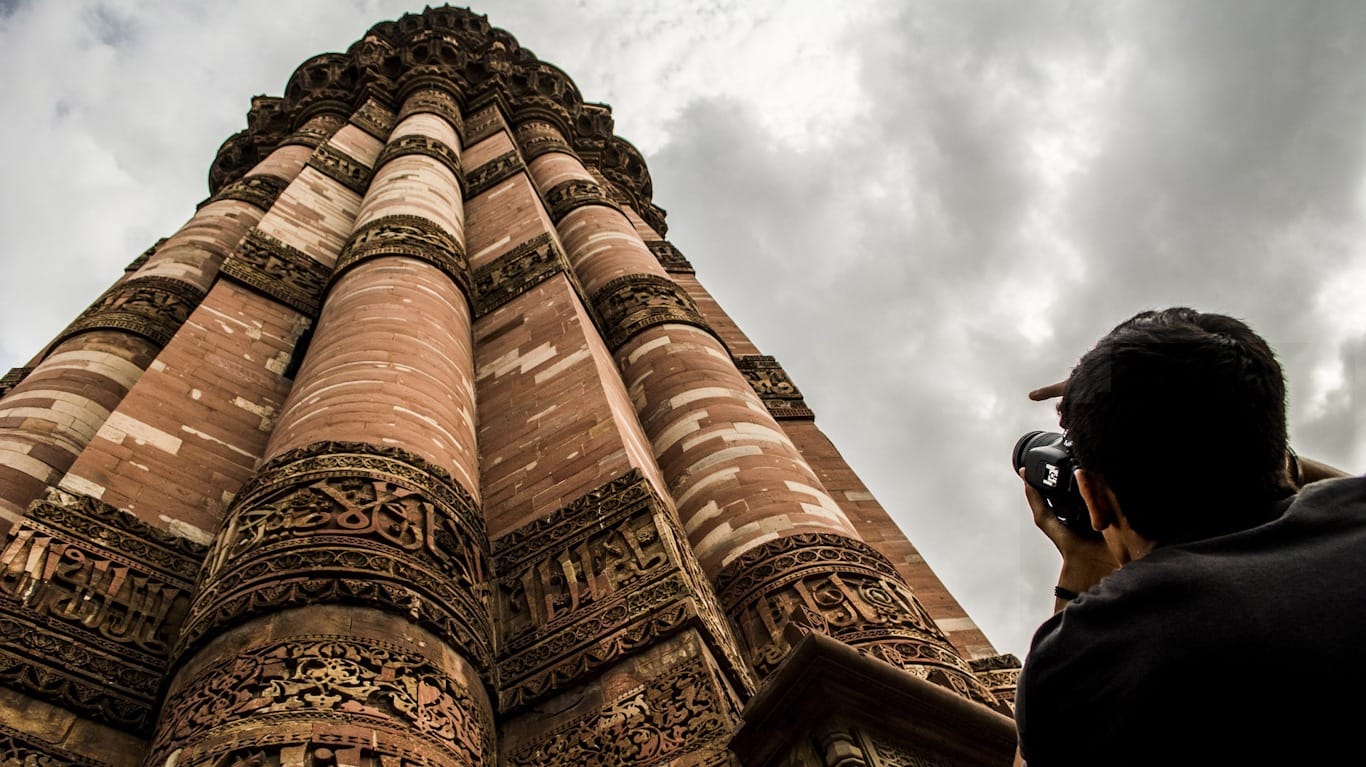
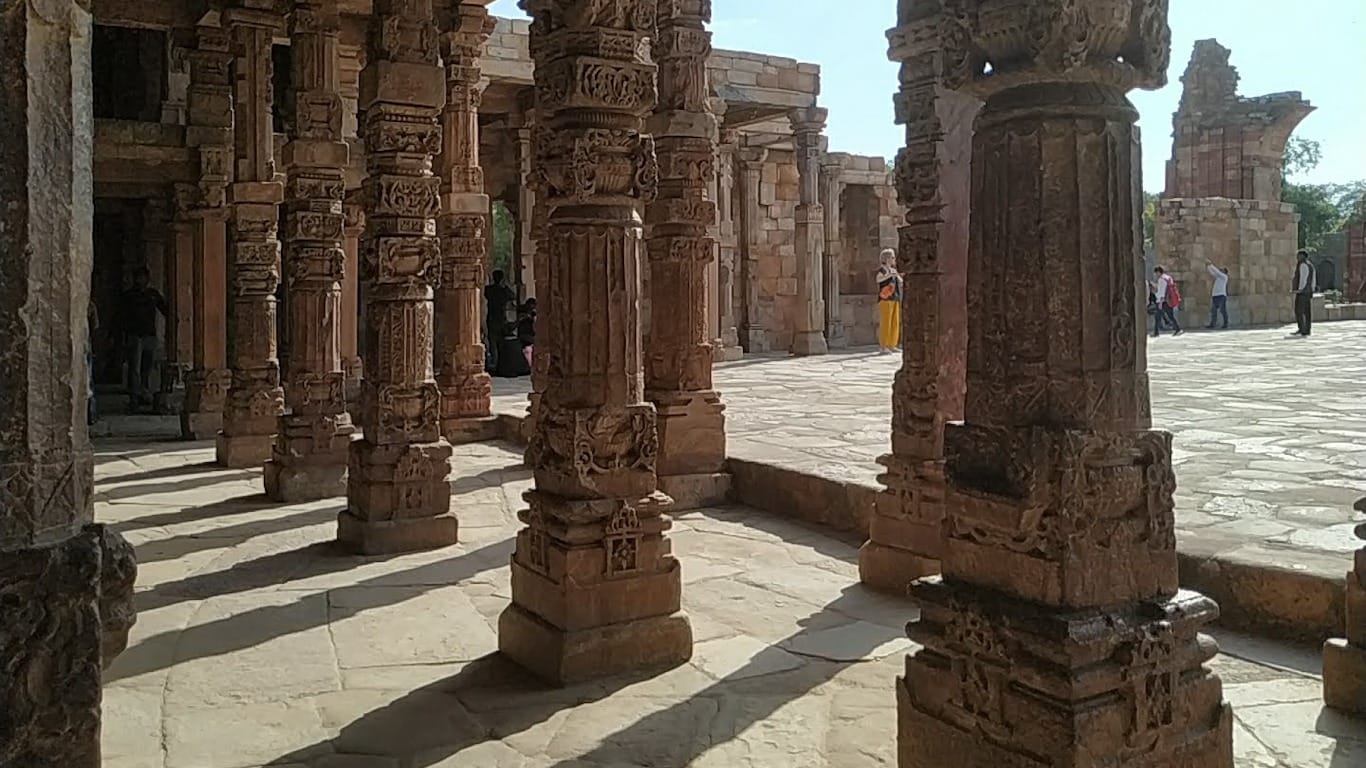
The minaret is undoubtedly the most valuable piece in the complex but there are other very important monuments of the period such as the Alai Darwaza (the entrance door), the tombs of Altamish, Ala-ud-din Khalji and Imam Zaminla, the Quwwat-ul-Islam Mosque (the oldest in northern India), Alai Minary and a 7 m high iron pillar.
If you have already visited any construction of the glorious Mughal Empire, you will have noticed their obsession with symmetry, Islamic symbology in their buildings and that care for the smallest details. Well, in the Qutub Minar complex is striking the lack of all these details that characterize.
There is a clear explanation for this. The Qutub complex was built on the ruins of the Lal Kot, the red citadel of Dhillika. Qutub-ud-Din Aibak ordered the demolition of the complex of 27 Hindu and Jain temples and the remains of these were used to build his mosque and other buildings in the complex. It is curious that the Mosque has ornaments of Hindu origin and the Iron Pillar in the courtyard has an inscription in Sanskrit as it was once a banner of the god Vishnu).
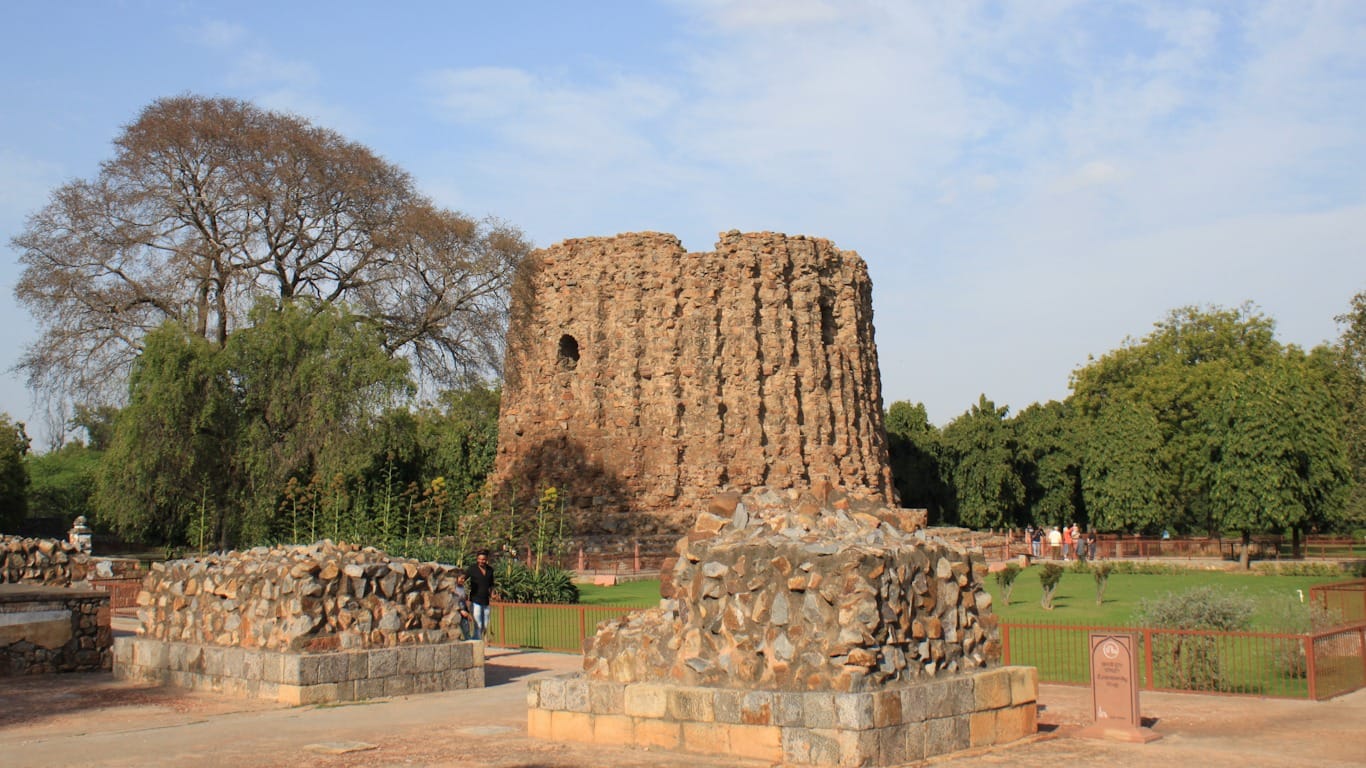
To the north of the Qutub Minar is the base of the Alai Minar, the unfinished minaret. Ala-ud-Din Khalji started it with the intention of building a minaret twice the size of the Qutub Minar. It was built with the intention of making it twice the size of the previous Minar. Unfortunately it was left unfinished and has only a 25m high floor.
The Qutub Minar complex was declared the UNESCO World Heritage Site in 1993.
Visiting the Qutub Minar
You can visit the complex and most of the buildings inside and take pictures. If you have time, I recommend you to dedicate a whole morning to this visit as it has a lot to discover.
In the past, it was possible to enter and climb to the second floor of the minaret but a few years ago it was closed to visitors after several suicides and a tragic accident in 1981. Now only some historians can enter if they obtain special permission from the Indian government.
When to visit the Qutub Minar
It can be visited at any time of the year, although I warn you that in the months of May to June in Delhi it is very hot and the humidity level is high.
Regarding the time of day, any time is good but if you want to avoid large accumulations of visitors, it is better to visit early in the morning. Keep in mind that they close the complex at sunset but after 6pm they do not allow new visitors to enter.
Whenever possible, avoid visiting on Sundays and holidays as the number of visitors is usually massive.
How to get to the Qutub Minar
To arrive by metro: the nearest stations are "Qutub Minar" and "Saket". (yellow line). Both are at a distance of 1.9km from the complex so the most practical way is to take a tuk tuk or cab from there.
Another option is to take a cab or tuk tuk directly with the Ola Cabs App from your location.
Practical information about the Qutub Minar
Schedule: from dawn to dusk.
Price: 500INR for foreigners and 30INR for Indian nationals.
Camera & video: to take videos there is a supplement of 25 INR.
Food & beverages: food is not allowed but you can bring your own water bottle.
Prohibited: backpacks are not allowed, you can leave them in the locker room at the entrance next to the lockers. Tripods are prohibited.
What to bring: comfortable clothes and shoes, a hat to protect you from the sun, and don't forget your camera or cell phone!
Guided tour: guides are always available at the entrance and for a small fee you can learn more about the history of the place.
Tips: at least 2 hours to visit the complex and I recommend that you take the tour with a guide to soak up the history and make the most of the visit.
I trust that this article about Qutub Minar in Delhi be useful for you and enjoy your visit to the fullest 🙂

Leave a Reply