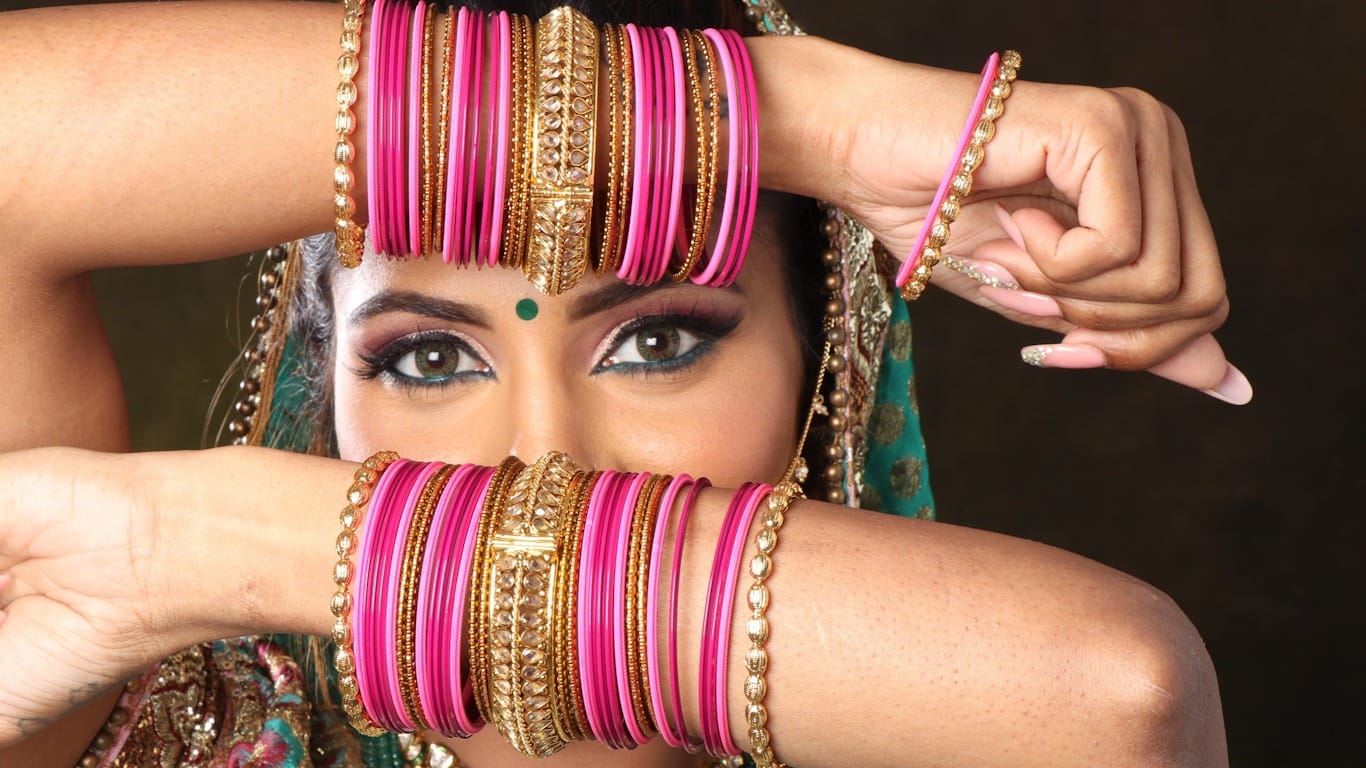
Surely you have seen on some occasion the women and men of India with their peculiar dot on their foreheads called bindi. And you may wonder, what does that dot mean? Why do Indians paint a dot on their foreheads? It is undoubtedly a very distinctive detail of their culture. I'll tell you all about that famous point at the level of the third eye, or the bindi in India.
What is the bindi?
The bindi is a dot or mark that Hindus make on their foreheads. This element is common in a number of Asian countries, especially in India and Nepal.
What does the bindi on India's forehead?
The word bindi comes from Sanskrit, specifically from the term "bindu" which in Sanskrit means drop or point. Depending on the geographic area, it is also known as tika, kumkum, bottu , teep. This symbol has several meanings both religiously and socially. Read on to find out all the details.
What is used to make the Hindu bindi on the forehead?
The bindi is usually made with a powdered ingredient and a natural wax. Saffron, turmeric, ashes of some sacrificial ritual or charcoal can be used as a powder. Sandalwood paste is often used as a unifying ingredient. Nowadays synthetic powders are also used to make bindi.
The origin of bindi in India - Bindi spiritual significance
When the rishi-muni wrote the Vedas (3000 B.C.) described the existence of the 7 chakras or energy points in our body. The sixth point, located on the forehead, is known as the "ajna chakra" or "third eye chakra". This energy center is the place where the bindi. The "ajna chakra" is the eye of intuition and intellect. Hindus consider that we have two eyes that focus on the outer world and a third eye that focuses on the inner world.
The bindi began to be applied to the sixth chakra to stimulate it and thus increase the innermost wisdom, and instinct to understand the vital aspects of our existence, it also strengthens concentration. In many areas of rural India they believe that the tilak It protects them from the evil eye and bindi has a spiritual and protective meaning.
Types of bindi in India
The bindi in religion: the tilak or tilaka
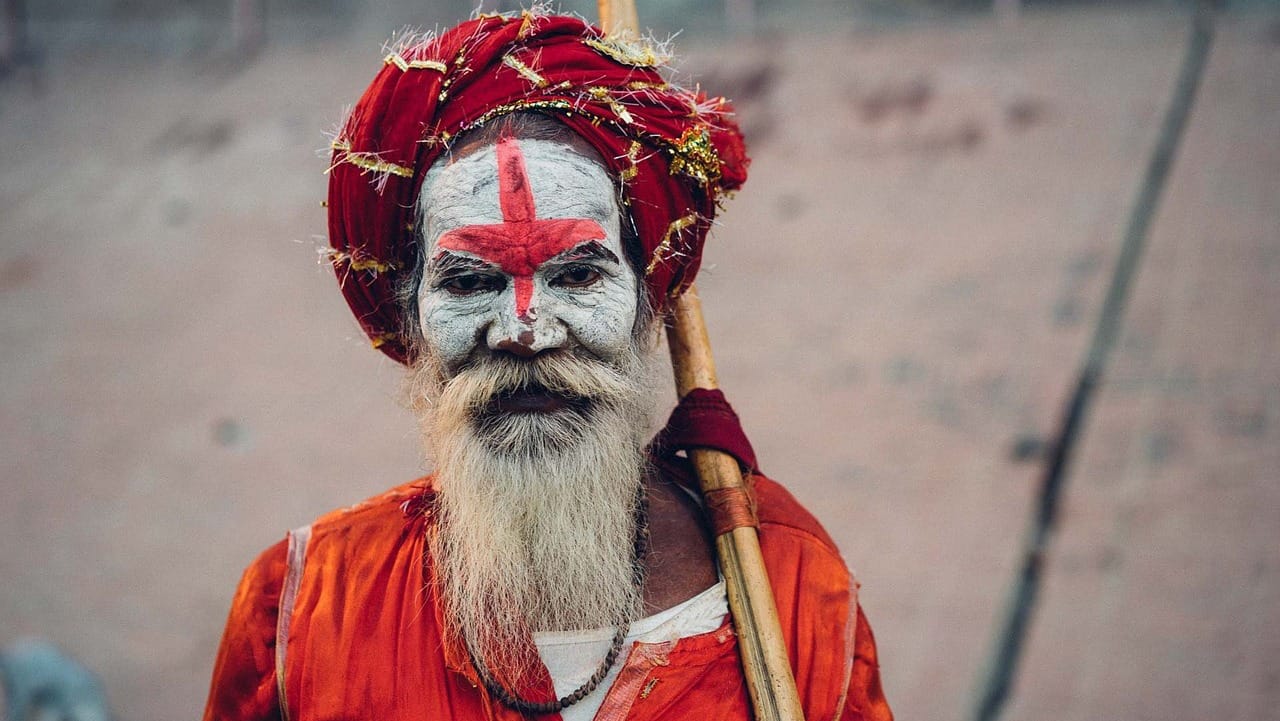
Since ancient times, the tilak to honor the gods. It is applied when you visit a temple, during religious celebrations and also in the prayers practiced every morning at home.
The sadhus continue to use this symbol in the most traditional way. Depending on the God they worship, there may be variations in the coloring material used and the design that is elaborated. To honor the god Shiva, ashes are used and three horizontal gray or white lines are drawn with a red dot in the center. To venerate the god Vishnu, sandalwood paste is used and a white design in the shape of a "U" is made with a red dot in the center.
In the use and meaning of the bindi for religious reasons the design has no space limitations and covers a wider area on the forehead that depends on the God being praised. The ashes represent the state in which we will all end up.
The point to indicate marital status
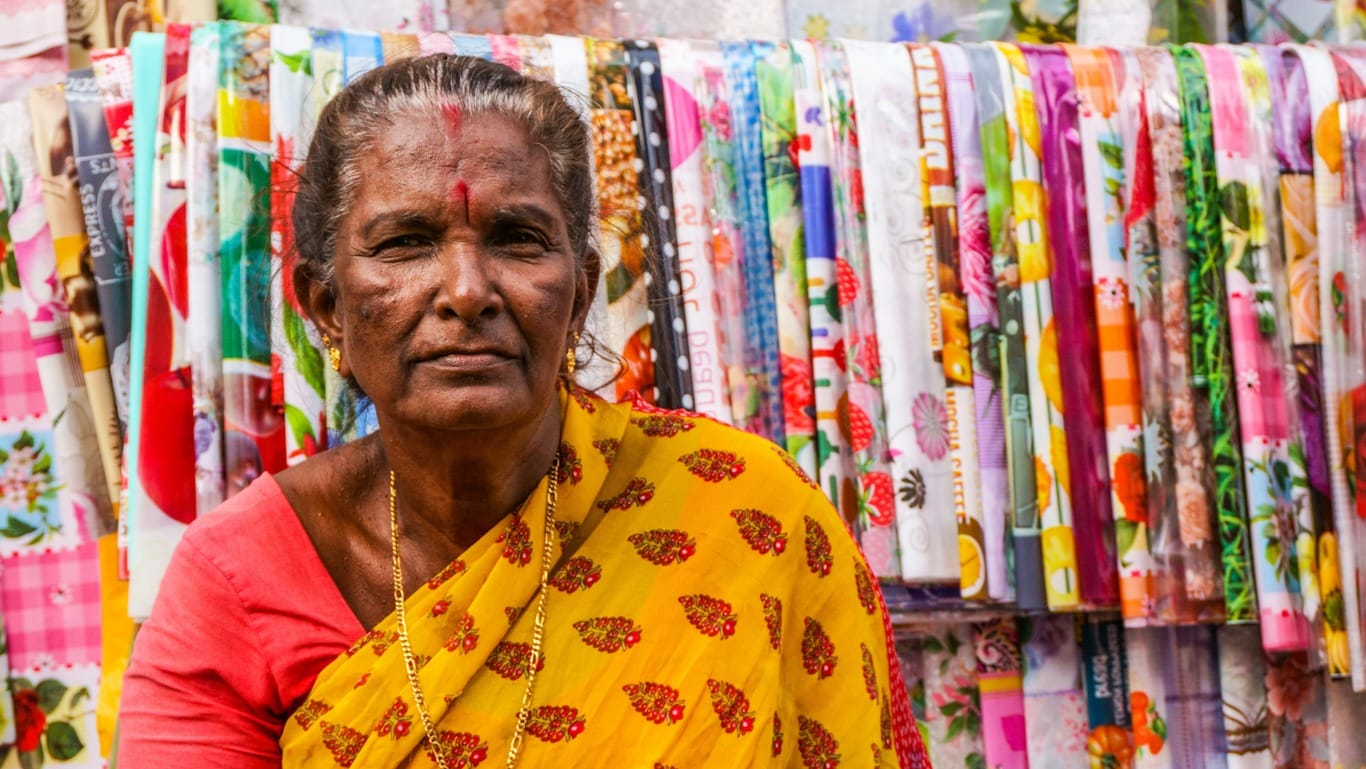
The bindi (in Sanskrit "bindu") tells us a lot about a person's identity before we meet them, their religion, the god they worship and in the case of women, their marital status.
And you may wonder... Why do Indian women have a dot on their foreheads? And what does it mean depending on the color of the bindi? Read on, I'll tell you...
The bindi at weddings in India
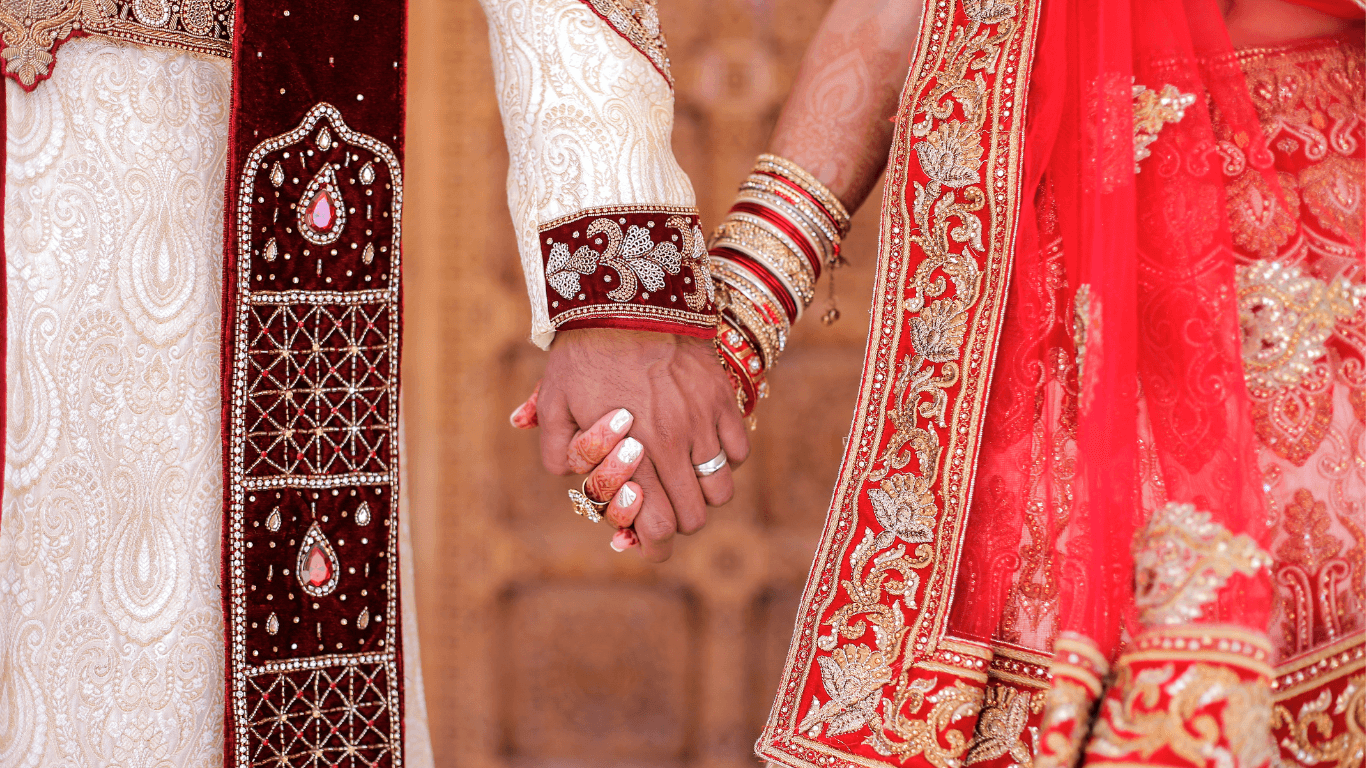
At hindu weddings there is a rituyal called "Sagan" in which the husband applies for the first time the sindoor on the woman's hair. This mark is made with red powder and is applied on the hair parting from the forehead. This symbol indicates that the woman is committed to him for life to give him happiness and well-being. It is said that in ancient times the man used his own blood for this ritual. When a woman is married, she is identified by the bindi red and sindoor and should be applied by her every morning. The color red represents honor, love and prosperity for women and marriage.
The bindi also symbolizes the goddess Parvati, which represents feminine energy and the protection of the woman and her husband.
The bindi for widowed women - (bindi color meaning)
Possibly you have wondered what the black dot on the forehead means in Indian? When a woman becomes a widow, she stops painting her forehead. sindoor on the parting of the hair. This symbolizes a river of blood full of life and when the husband dies that river dries up so it should no longer color that area. In addition the bindi must be black and may only wear white clothes and no colored accessories. This tradition is still alive and well, especially in rural areas throughout India.
Bindi in men
Men also use the bindi to indicate that they are Hindu and refer to the god they worship.
The point on the forehead (India) today
Currently and especially in large cities, the bindi has become a decorative element and many women use it to enhance their beauty. There are a myriad of bindis decorative stickers, with a wide variety of colors and shapes.
Buy decorative bindi
If you are a lover of Indian culture and you want to use the bindi, I share with you the link to some bindis colored stickers that stick and here you can find many different designs.
I hope you found this article useful and that it has cleared up any doubts you may have about the meaning of bindi in Indian culture.


Leave a Reply