
Nadi Shodana is one of the favorite Pranayamas among practitioners due to its immediate relaxing effect and the ease to perform it. Here are the details of what it is Nadi Shodana, what are its benefits and how to practice it.
Nadi Shodana
This : "Pranayama has a direct effect on both hemispheres of the brain as it stimulates them (increasing their activity) alternately through breathing. Parasympathetic nervous system is stimulated by the breath that flows through Ida (left fossa) and this relaxes the body in addition to reducing the heart rate. On the other hand, the system nervous Sympathetic is stimulated by breathing through Pingala (right nostril) and this causes an increase in heart rate. The practice of this Pranayama stimulates both hemispheres and also balances the activity of both hemispheres providing a a sense of peace and well-being in our body, mind and spirit.
How to practice Nadi Shodana
Posture: It is very important to adopt a comfortable posture that allows you to keep your back straight and stretched. There are multiple postures such as sukhasana or "easy posture", siddhasana "perfect posture", padmasana "lotus posture" or vajrasana or "diamond pose". For beginners I recommend the easy posture or diamond posture.
Mudra: We will use the mudra Nasagra to open and close the nostrils. To perform this mudra we will use the thumb to cover the right nostril, the ring finger to cover the left nostril. The index and middle fingers will remain resting on the palm of the hand or resting on the space between the eyebrows at the height of the Ajna chakra.
Technique:
- Sit on a comfortable position (sukhasana, siddhasana, padmasana or vajrasana).
- Keep your back straight and your head upright.
- Relax your body, close your eyes and consciously prepare for your practice.
- Practice conscious breathing for 5 -10 breathing cycles.
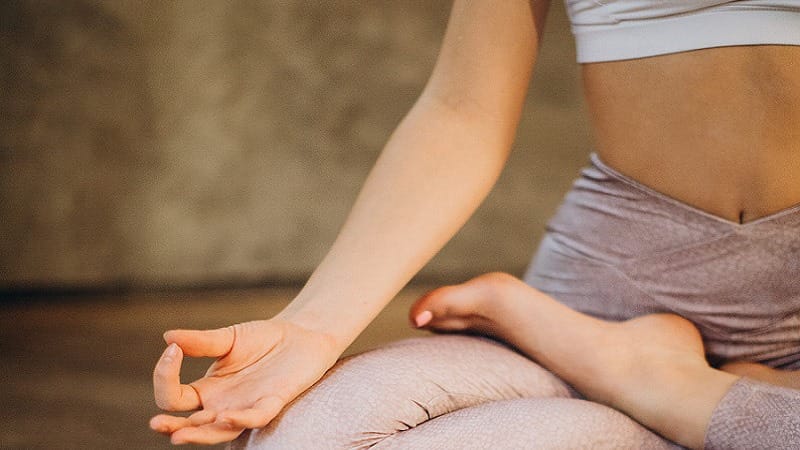
- With the right hand, use the mudra Nasagra and your left hand can be left on your knee with the mudra Chin or Jnana.
- Press-close the right nostril with the thumb and inhale through the left nostril.
- Press-close the left nostril with the ring finger and exhale through the right nostril.
- With the left nostril still closed, inhale through the right nostril.
- Press the right nostril and exhale through the left nostril to complete a cycle.
- Repeat this cycle 10 times.
Both inhaling and exhaling should be deep, continuous and relaxed. This breathing should be silent and you should focus on feeling the flow of the breath during the whole process.
For beginners we start with a 1:1 ratio, which means that we will dedicate the same time to the inhalation and exhalation. With time and experience, this ratio should be increased little by little but maintaining the ratio.
Retention: Once the practitioner is intermediate, withholding is added to the practice of Nadi Shodana.
Bolts: When the practitioner is intermediate-advanced, bolts are added or "Bhandas" to the practice of Nadi Shodana.
Precautions
Nadi Shodana should never be done in a hurry or in a forced manner. Also, it should not be practiced if you have a cold, flu or fever. You should always adapt the practice to your capacity and if you feel unwell you should stop the practice.
Benefits
- Increases oxygenation of the organism
- Increased vitality and a more energetic feeling
- Purifies energy channels and chakras by eliminating toxins
- Activates the chakra Ajna
- Improves skin tone and radiance
- Balances the Sympathetic and Parasympathetic nervous system
- Calms the mind by reducing anxiety and stress
- Cleanses the respiratory tract and improves lung function
- Reduces high blood pressure, heartburn and other effects of stress
- Stimulates well-being and a sense of peace
- Heart rate reduction
- Improves digestion and nutrient absorption
- Helps eliminate toxins from the blood
- Aids relaxation of muscles and mind
I hope you find my article on Nadi Shodana useful and that you benefit from the wonders that Pranayama can do for your health and your life.
