
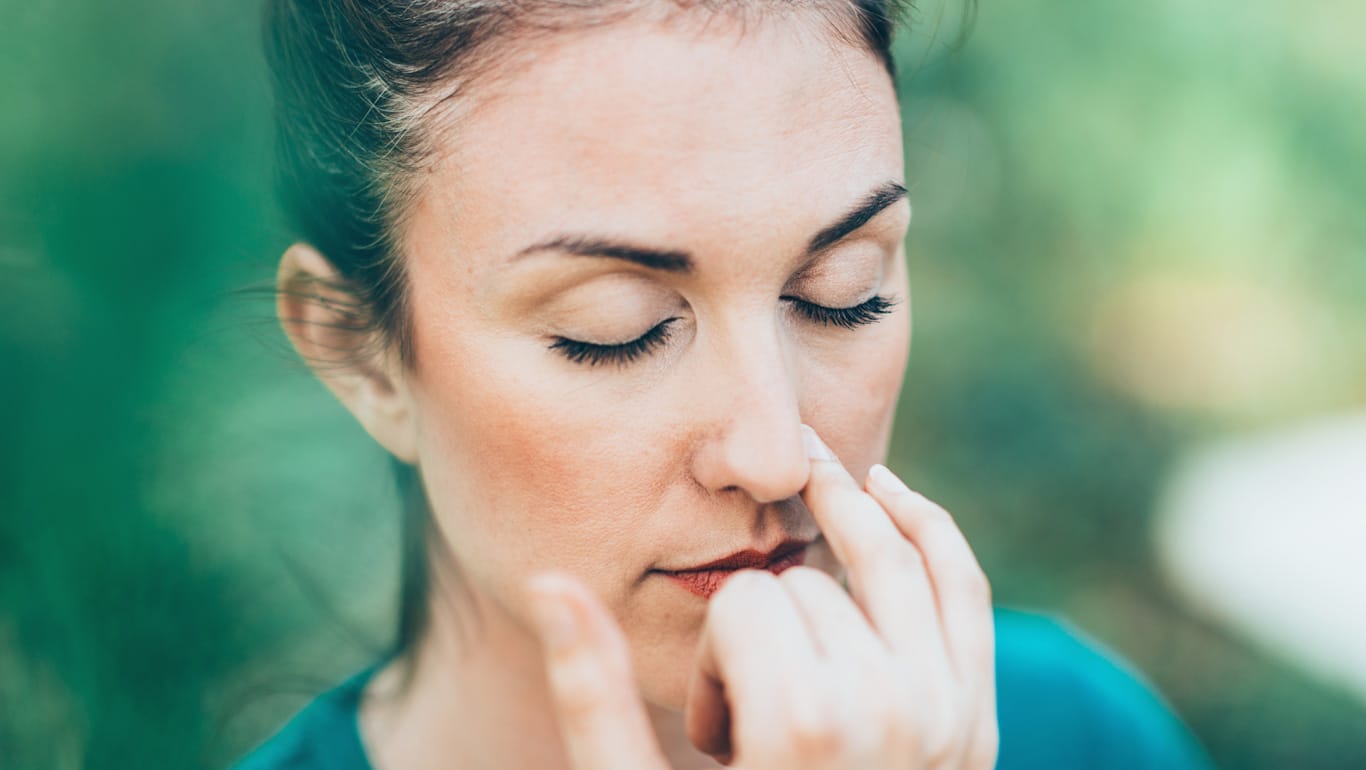
Breathing is our most vital function and often the one we give the least importance to. In India, the Yogis thousands of years ago recognized the importance of breathing and because of this they developed techniques that today you can benefit from to improve your health. Let me explain what is the : "Pranayama and what are its benefits.
: "Pranayama what is it?
: "Pranayama is the science of breathing in the practice of yoga and is the fourth of the 8 branches of Yoga described in the Yoga Sutras of Patanjalí. Pranayama is made up of a set of breathing exercises and techniques which main objective is to slow down our breathing automatically, thus increasing the oxygen level in our organism and very importantly, increasing the expulsion of carbon dioxide metabolic wastes.
Origin of the : "Pranayama
: "Pranayama is a word that comes from Sanskrit and is composed by prana , which means "vital energy" and ayama , which means "extension or expansion". Therefore, the word Pranayama means "the extension or expansion of vital energy.". The : "Pranayama has been practiced for thousands of years. The great Yogis in the Himalayan mountain ranges considered it to be the secret to keep the mind calm and optimal health. There are writings that mention the techniques of : "Pranayama already since the 15th century, one of the best known is "Hatha Yoga Pradipika".
The stages of the : "Pranayama
According to the science of : "Pranayama, our breathing cycle should consist of 4 steps: inhalation, exhalation, internal and external retention. For beginners in this practice the focus should be on the inhalation and exhalation but once the practitioner is advanced, the focus is placed on the retentions. Retentions are the real magic of practice from Pranayama.
Inhalation or Pooraka
It should be deep, slow, uniform and following the patterns of yogic breathing (complete breathing).
Retention of internal breathing or Antar Kumbhaka
After inhaling, we pause the breathing process and hold the air in the lungs. The main objective is to achieve a better metabolization of oxygen. It can last from 3 to 15 seconds for beginners to several minutes for advanced practitioners.
Exhalation or Rechaka
This is the process responsible for expelling air and carbon dioxide metabolic wastes. During exhalation we are purifying the body of impurities. The exhalation should be deep and last longer than the inhalation (the goal for an advanced practitioner is for the exhalation to last twice as long as the inhalation).
External breath-holding or Bahir Kumbhaka
After exhaling, we stop the breathing process and hold with empty lungs. (only for practitioners of : "Pranayama advanced).
Types of breathing
There are different types of breathing depending on the body zone that we use for this process and that directly affects the depth of breathing.
Abdominal or Diaphragmatic Breathing
This is the most common breathing applied on its own. When inhaling, the lower part of the lungs fills with air and as a consequence the diaphragm descends and the abdomen swells.
Thoracic, Costal or Intercostal Breathing
It is the breathing in which the rib cage expands and we do not let air pass to the abdominal area. The breathing capacity and oxygen intake with this technique is less than with abdominal breathing and therefore less efficient.
Clavicular Breathing
It is produced when we fill only the upper part of the lungs with air and this process causes a movement of the clavicle. I should add that this type of breathing is the least efficient if we apply it alone and can cause health problems if we abuse it.
Yogic or Complete Breathing
It is the combination of abdominal, thoracic and clavicular breathing. This is the type of breathing that we want to obtain automatically with the continuous practice of exercises of pranayama.
Types of : "Pranayama
There are several types of : "Pranayama with different objectives and benefits. Here I indicate the most known when you start in this practice and in the next articles I will explain in detail each of these types of Pranayama, what they consist of and their benefits.
Cleaning Exercises - Stimulation
- Kapalbhati: in Sanskrit means "clean or enlightened skull". It brings us an intensive cleansing of carbon dioxide in the body, improves circulation, digestion and brings clarity to the mind.
- Bhastrika: in Sanskrit means "bellows". It brings us an intense dose of energy and invigorates the rejuvenation of the mind and body.
Balance Exercises
- Nadi Shodana: in Sanskrit Nadi means "channel" and Shodana "clean-purify". This exercise balances the nervous system, synchronizes the two hemispheres of the brain, reduces the heart rate and purifies our energy channels. It brings a lot of tranquility and well-being.
- Ujjai: in Sanskrit means "victorious". It brings relaxation and calm in the mind and heart functions. Very good in times of stress.
Relaxation - Meditative Exercises
- Bhrameri: in Sanskrit Bhramar means "bee" and is referred to as the pranayama of the "sound of the bee". It strengthens the immune system and is very relaxing.
- Sheetali: in Sanskrit Sheet means "cold" and Sheetal "calm". It provides us with body temperature regulation, muscular and mental relaxation as well as a feeling of satisfaction.
Benefits of the practice of : "Pranayama
- Improves oxygenation of the organism
- Improves circulation
- Aids in the regeneration and rejuvenation of the body's cells.
- Balances the nervous system
- Calms the mind by reducing anxiety
- Improves concentration
- Stimulates well-being and a sense of peace
- Heart rate reduction
- Improves digestion and nutrient absorption
- Lungs are strengthened and purified
- Helps eliminate toxins from the blood
- Aids relaxation of muscles and mind
You may also be interested in my publication: Ayurveda, the traditional Indian medicine
Did you like this article? You can leave your comments and questions here - we'll be in touch!
