
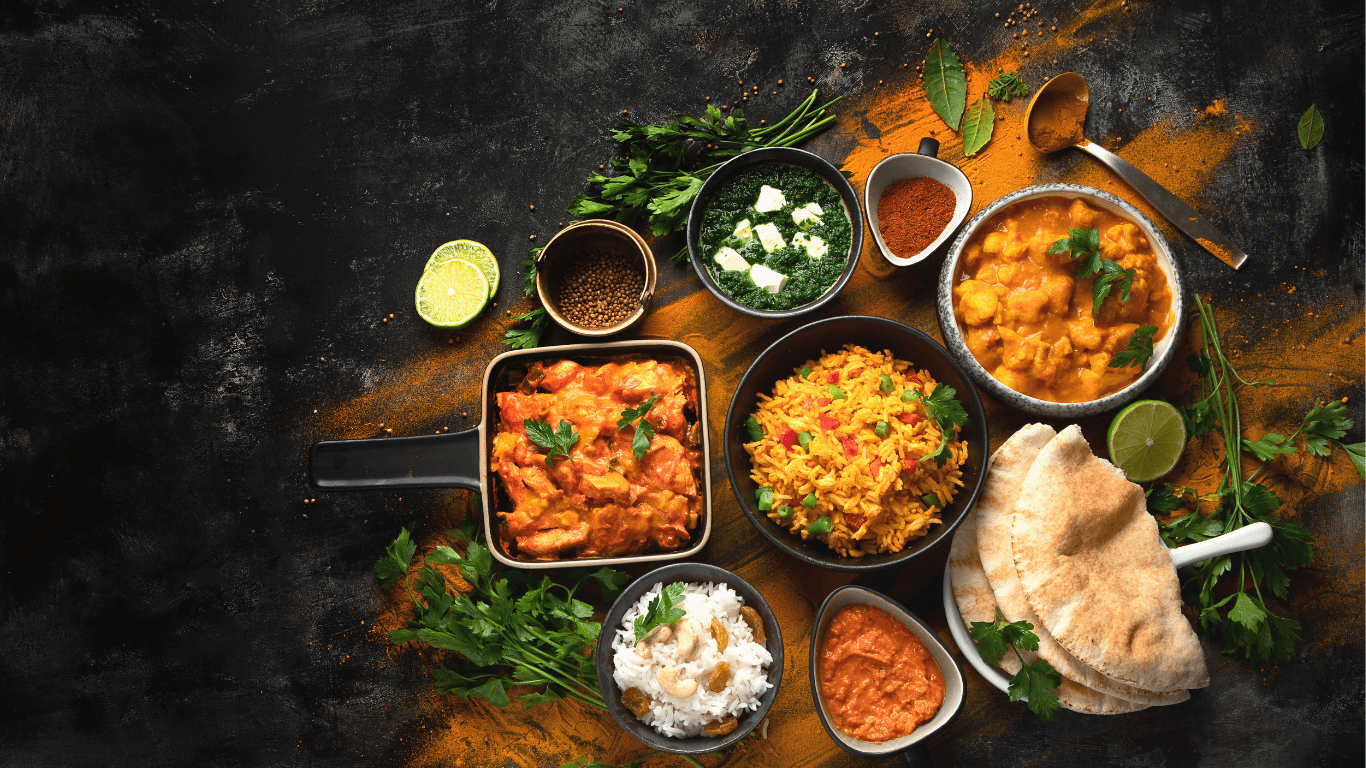
Indian cuisine is one of the most diverse and richest in the world. It is distinguished by its wide variety of flavors, ingredients and cooking techniques that vary by region. Eating in India means exploring everything from the best-known main dishes to vibrant street food. But it is also embracing an ancient philosophy where food not only nourishes, but heals, celebrates, connects and honors. Indian food is not just about filling the stomach, but has the ability to transform the experience of the traveler who arrives with open senses.
Eating in India is a sacred act - Food in India
Beyond taste, indian food in India is a living memory. Each indian recipe contains generations of knowledge passed down with love, each spice has a medicinal or spiritual purpose, and each shared meal reaffirms family and community ties. Sitting at the table in India - or on the floor, as tradition dictates in many homes - is an act of communion with the land, with the ancestors and with the present. It is not just about eating, but about paying homage to food as a form of gratitude and reverence. Eating in India is also a form of daily spirituality.
And not only what you eat is important, but also howyou eat it. In many homes and traditional restaurants, eating with your hands in India is a common practice, loaded with symbolism. It is considered a way to connect directly with food and activate all the senses, something I explained in depth in my article on why in India people eat with their hands. This simple and ancestral gesture is, in itself, a ritual.
The link between gastronomy and spirituality
One of the most beautiful aspects of Indian gastronomy is how it is intertwined with Ayurveda, the traditional system of medicine, which considers that everything that enters the body affects the mind and spirit. Thus, food is not only chosen for its taste, but for its energy. A sattvic meal, for example, seeks to bring clarity and balance, so it is prepared without garlic or onions, with fresh, light ingredients and cooked with a loving intention. In many temples and ashrams, this type of food becomes a form of active meditation, where cooking is also praying. Thus, Indian food becomes a channel of purification and positive energy.
It is also common the thali, a metal tray that contain small portions of different flavors: sweet, spicy, sour, salty, bitter... Each bite seeks balance, reflecting the Indian philosophy of inner harmony.
In addition, if you are planning your first trip to India or simply want to better understand its food culture, you may find it useful to know the Indian table etiquettewhere every gesture, from how the rice is served to how the food is thanked, has a meaning.
And of course, if you're in a restaurant and don't know where to start, I've prepared a selection of recommendations about what to order in an Indian restaurantwhether you want to try the most typical or vegetarian options, or if you are looking for vegetarian or lightly spicy options.
The most popular food in India - Food Dishes to Eat in India
The richness of Indian food is especially reflected in its main dishes. To eat in India is to savor a cuisine where time stands still to honor each ingredient.
Chicken Tikka Masala
This dish, one of the most famous in Indian cuisine, combines tradition and modernity. It is prepared with pieces of chicken previously marinated in yoghurt and spices such as turmeric, ginger, cumin and garam masala. They are then cooked in a tandoor oven or grilled to obtain that characteristic smoky flavor. They are then dipped in a creamy, spicy sauce made from tomato, cream and a delicate balance of spices. Although popularized outside India, its essence remains deeply Indian. Served with basmati rice or naan bread, it represents the perfect harmony between intensity and softness. An unmissable classic for anyone who wants to get a closer look at real Indian food.
Biryani
Biryani is not just a dish, it is a celebration. This spicy rice, originating from the Muslim tradition of the subcontinent, is cooked in layers with lamb, chicken, fish or vegetables, creating a symphony of flavors and aromas. Each region has its unique version: Hyderabad's biryani is spicy and deep, Lucknow's is fragrant and milder, and Kolkata's has sweet notes and whole spices. Preparing it is an art that requires time and precision. The end result is a dish that awakens the senses and tells stories in every bite. Few dishes represent the diversity of Indian cuisine as well as this one.
Korma
For palates seeking softness without sacrificing depth, korma is a delight. It is made with a creamy yogurt base, nuts such as cashews or almonds, and mild spices that perfume without overwhelming. Chicken, lamb or vegetables are cooked slowly, absorbing the flavors until they are tender and full of aroma. Korma is a symbol of Mughal sophistication in Indian cuisine and is often served at celebrations or special meals, accompanied by aromatic rice or freshly baked bread.
Chole Bhature
Typical of northern India, especially in Punjab, this dish combines spiced chickpeas (chole) cooked with tomato, onion and a range of intense spices, with a puffed and fried bread (bhature) that is light, crunchy and addictive. It is usually served at hearty breakfasts or lunches, and is one of those dishes that, beyond nourishing, is comforting. On the streets of Delhi, it is almost an institution. A living example of how food in India is deeply linked to daily life.
Dal Makhani
Makhani dal is one of India's most beloved vegetarian curries. It is prepared with black lentils (urad dal) slowly cooked for hours with butter, cream and mild spices to a creamy, rich texture. It is typical of northern cuisine, especially in the Punjab region. Its deep and comforting flavor makes it a must-try dish, ideal with white rice or naan.
Palak Paneer
A creamy green gem that combines fresh spinach cooked with mild spices and chunks of paneer cheese, a type of fresh cheese typical of India that does not melt. This dish is very popular among vegetarians and is usually served with jeera rice (with cumin) or chapati. Beyond its attractive color and flavor, palak paneer is also an excellent source of iron, protein and vegetable energy. It forms an essential part of vegetarian menus in Indian cuisine.
Indian Street Food in India: Eating in India on the Go
Street food in India is not just a simple craving: it is a direct way to get to know the heart of the country. Whoever dares to try it, is accepting an invitation to feel the authenticity of Indian life at every corner. Eating in India also means standing in a noisy corner, surrounded by intense aromas, and letting yourself be carried away by the art of improvisation.
Samosas
Samosas are one of the country's most iconic snacks. These triangular pasties, with their crispy fried dough and warm, spicy interior, are a constant presence in streets, train stations and markets. The filling varies, although the most common is potato, peas and spices such as cumin, turmeric and garam masala. They are served with chutneys - sweet tamarind or spicy coriander - that elevate each bite to a small explosion of flavor.
Chaat
Chaat is not a dish, it's an experience. A bold blend of textures and flavors that combines boiled potatoes, chickpeas, crunchy papdis (crackers), yogurt, chutneys, spices and pomegranate. Each bite alternates between sweet, salty, sour and spicy. It is the lifeblood of the markets and a favorite of those looking for something fresh, quick and absolutely delicious. There are many regional versions such as aloo chaat, dahi puri or sev puri. In each version, Indian food shows its festive side.
Bhelpuri
Originally from Mumbai, bhelpuri is a light and tasty snack prepared with puffed rice, sev (fried chickpea flour noodles), onion, tomato and an assortment of chutneys. It is crunchy, spicy, a little sweet and refreshing. Its street character makes it a popular choice for those strolling by the sea or among the enchanting chaos of urban bazaars.
Kebabs
Although associated with Muslim heritage, kebabs are an essential part of Indian street food. They can be spiced minced meat (seekh kebab), marinated roasted pieces (chicken tikka), or even vegetarian versions made with paneer or soybeans. They are cooked over charcoal or in tandoor, impregnating the air with irresistible aromas. Served with onion, lemon and green chutney, they are a real nighttime temptation. Those who visit India for the first time should try them to understand in depth the street value of Indian gastronomy.
Pani Puri
This Indian food icon, also known as golgappa or puchka depending on the region, consists of crispy spheres of wheat or semolina flour filled with a mixture of potato, chickpea and chutney, which are dipped in water spiced with tamarind and mint. The explosion of flavors in the mouth - spicy, sour, sweet and salty - makes this experience a true ritual for indian street food in India.
Vada Pav
Considered the "Indian burger", vada pav is a roll stuffed with a ball of spiced mashed potato, battered and deep-fried. It is served with spicy chutneys and sometimes with a fried chili on the side. Originating in Maharashtra, this simple snack is a tribute to accessible, tasty and hearty Indian food.
Pakoras
The pakoras are made with vegetables, cheese or even bread dipped in a chickpea flour batter and fried to a crispy golden brown exterior. My favorite are the onion pakoras but they can be made with almost any vegetable. chutney: it can be mint chutney, tamarind, tomato chutney, mango chutneyThey are a popular choice during monsoons or as a quick snack at markets and stations.
Mirchi Bajji
Originally from southern India, mirchi bajji are large green chilies stuffed with masala and dipped in chickpea flour before frying. Despite their appearance, they are usually not overly spicy and are enjoyed as a crunchy and spicy snack, perfect for those looking for intense flavors and surprising contrasts.
And we cannot talk about the experience of eating in India not to mention its traditional drinks. From the comforting masala chai, which is served at any time of the day, up to the lassi, a yogurt-based drink that can be sweet, salty or even fruity like the popular mango lassi... Each sip has its function.
Also noteworthy is the chaas masala, a spicy and light version of the salty lassi, ideal to ease digestion, or the refreshing and refreshing jal jeera, water with cumin, mint and lemon, and the nimbu pani, a spicy lemonade that becomes a real lifesaver during the hot summers of the subcontinent. And I can't fail to mention golden milk and all of its properties, a great ally in the ayurvedic medicine. Each drink not only accompanies, but nourishes and balances.
Eating India's street food is an adventure but it can also be a challenge for beginners, so be sure to read my guide with health tips to avoid unforeseen events. Also remember that traveling with insurance is a must for your trip to India. To explain it in detail, I have written an article on the best insurance for your trip to India. I always recommend the Heymondo travel insurance as they are experts in the needs of travelers and have many options depending on your trip. In addition, as a reader of My Trip to India, you get 5% discount on your insurance.
5 % DISCOUNT on Heymondo Insurance
To travel to India or any other destination (and at any date)
Sweets and Desserts: The Art of Sweetness
Sweets are the secret language of food in India. They accompany births, weddings, festivals and also farewells. In Indian gastronomy, the end of a meal is not complete without something sweet. Here I recommend you some must-eat sweets in India 😊.
Gulab Jamun,
One of the most endearing desserts of India, the gulab jamun consists of fried balls made from powdered milk, flour and a touch of cardamom. After frying them slowly, they are dipped in a hot syrup with rose water and saffron. The result is a soft and spongy texture that melts in the mouth, leaving a delicate and floral sweetness. It is commonly found at weddings, festivals and all kinds of celebrations.
Laddu
Laddu is one of the most versatile and popular sweets in India. It is generally made with chickpea flour (besan), ghee and sugar, forming spheres of grainy texture and intense aroma. There are many regional variations, such as motichoor laddu - made with small fried balls called boondi - which are bound with syrup and molded by hand. It is considered a symbol of auspiciousness and good luck, and is rarely missing from a religious offering.
Barfi
This dense and compact sweet is based on milk or condensed milk, sugar and nuts. It is flavored with cardamom, rose water or saffron, and is often decorated with edible silver leaf (vark). Barfi comes in many variations: pistachio, coconut, carrot (gajar barfi) or almond. Its smooth texture and concentrated flavor make a single slice deeply satisfying.
Jalebi
One of the most visual and crunchy sweets, jalebi is a golden spiral made from fermented flour dough, fried to a crisp and then dipped in a sugar and cardamom syrup. It is usually served hot, and in some regions it is enjoyed with a glass of milk or rabri, a thick milk cream. Jalebi is a symbol of celebration, especially on festivals such as Diwali or Holi, where its shape and color bring visual and gustatory joy. A perfect ending to any Indian dining experience.
Rasgulla
A typical sweet from Bengal, rasgulla is a soft and spongy dumpling made of fresh cheese (chhena), cooked in light syrup. Its texture is as delicate as its flavor, and it is usually served cold, being a refreshing and subtle way to close an Indian meal.
Sandesh
Another treasure of Bengali confectionery, sandesh is also made with chhena, to which sugar and cardamom are added. Its silky texture and elegant flavor make it one of the most appreciated sweets in religious and festive celebrations.
Kheer
Kheer is an Indian-style rice pudding, slowly cooked with cardamom, nuts and sometimes saffron. This dessert is loaded with symbolism and is offered as a prasad (sacred offering) at many Hindu temples and festivals. Its leisurely sweetness and spicy aroma sum up the spirit of Indian spiritual cuisine.
Eating in India by Region (best food in India by region)
India is a country of continental dimensions and its cuisine varies significantly from one region to another. Each area has its own unique base ingredients, cooking techniques and cultural influences. Here is a tour of the main regional traditions of Indian food:
North India
Rich, creamy and spicy dishes, influenced by Mughla cuisine, predominate in this region. The use of dairy products such as ghee, cream and yogurt is common, as well as long cooking and tandoor baking. Breads such as naan, roti and paratha are widely consumed. Some iconic examples are chicken tikka masala, dal makhani and chole bhature.
South India (My fav is food in Kerala India)
The food in south India is characterized by a lighter, vegetable, spicy and rice-based cuisine. Coconut, tamarind, leaf curry and grain mustard are essential ingredients. Techniques such as tempering (tadka) and fermentation-based preparations, such as dosa (rice and lentil crepe), are very common. Dishes such as sambar, rasam and masala dosa reflect this. profoundly ayurvedic cuisine. One of my favorite preparations is the curry with coconut milk, and especially the shrimp curry with coconut.
Western India
In Gujarat, vegetarian cuisine with sweet and sour flavors predominates. In Rajasthan, the use of pickles and drying vegetables is key. Goa brings marine flavors and intense spices with Portuguese influence. Maharashtra is noted for its street cuisine such as vada pav. Indian food here is a melting pot of traditions, climates and history.
Eastern India
Fish, rice and mustard are widely used in West Bengal. Dishes such as shorshe ilish or macher jhol are part of everyday life. It is also a land of sweets such as rasgulla and sandesh. This region is characterized by a balance between intensity and delicacy.
Eating in India is traveling with the soul
Eating in India is much more than a gastronomic experience: it is a sensory, cultural and spiritual journey that leaves its mark. Every dish, every spice and every bite tells an ancient story that is intertwined with rituals, beliefs, festivities and everyday gestures.
From the hustle and bustle of a street market to the tranquility of a home-cooked meal served on banana leaves, Indian gastronomy invites you to open all your senses. To eat in India and taste its flavors is also to open oneself to the heart of the country, to its contrasts, its generosity and its ancestral wisdom.
Those who dare to explore Indian food with an open mind and sincere curiosity will discover that in India, food is not only eaten to nourish, but also to celebrate, to heal, to thank... and to love. Because in India, food is not served on plates, it is offered from the soul.
I trust that this article about what to eat in Indiato help you during your trip 🛩️ and don't miss my section on Indian recipes!

Leave a Reply