
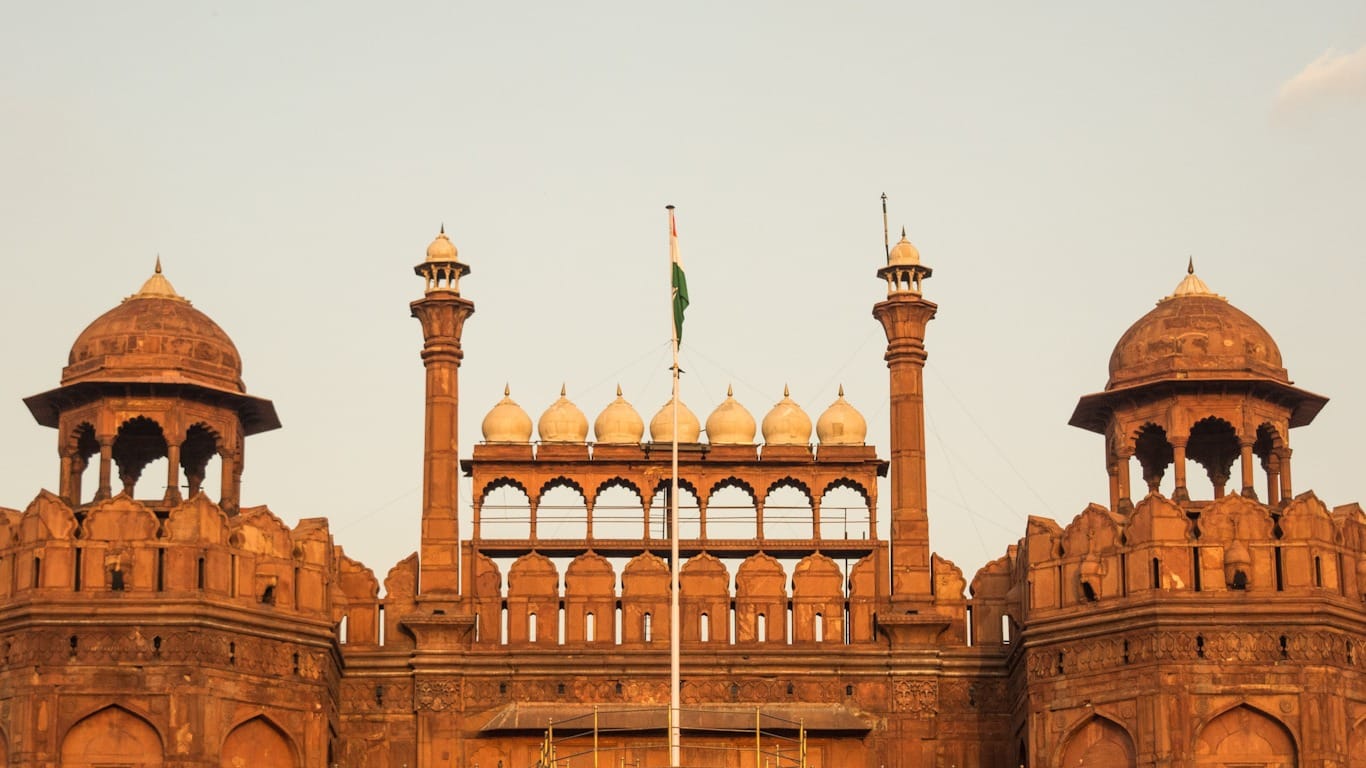
The Red Fort in Delhi is undoubtedly one of the most important constructions during the Mughal empire. Its walls hide many secrets and it is a must visit during your stay in the capital of India.
History of Delhi Red Fort
The Red Fort of Delhialso known as Lal Qila (in Hindi), owes its name to the color of the red sandstone used to build the fortress..
Its construction began in 1638 and took about 10 years. Shah Jahan, the fifth Mughal emperor, planned its construction when he moved the capital of the Mughal empire from Agra to Delhi, at that time known as Shahjahanabad.
The Red Fort located along the Yamuna River and together with the Salimgarh Fort, built in 1546 by Islam Shah Suri, formed the Red Fort complex covering an area of 49 hectares. The structure of the complex was designed according to Islam and its symbologies.This concept was quite innovative at the time and would later shape later monuments of the empire.
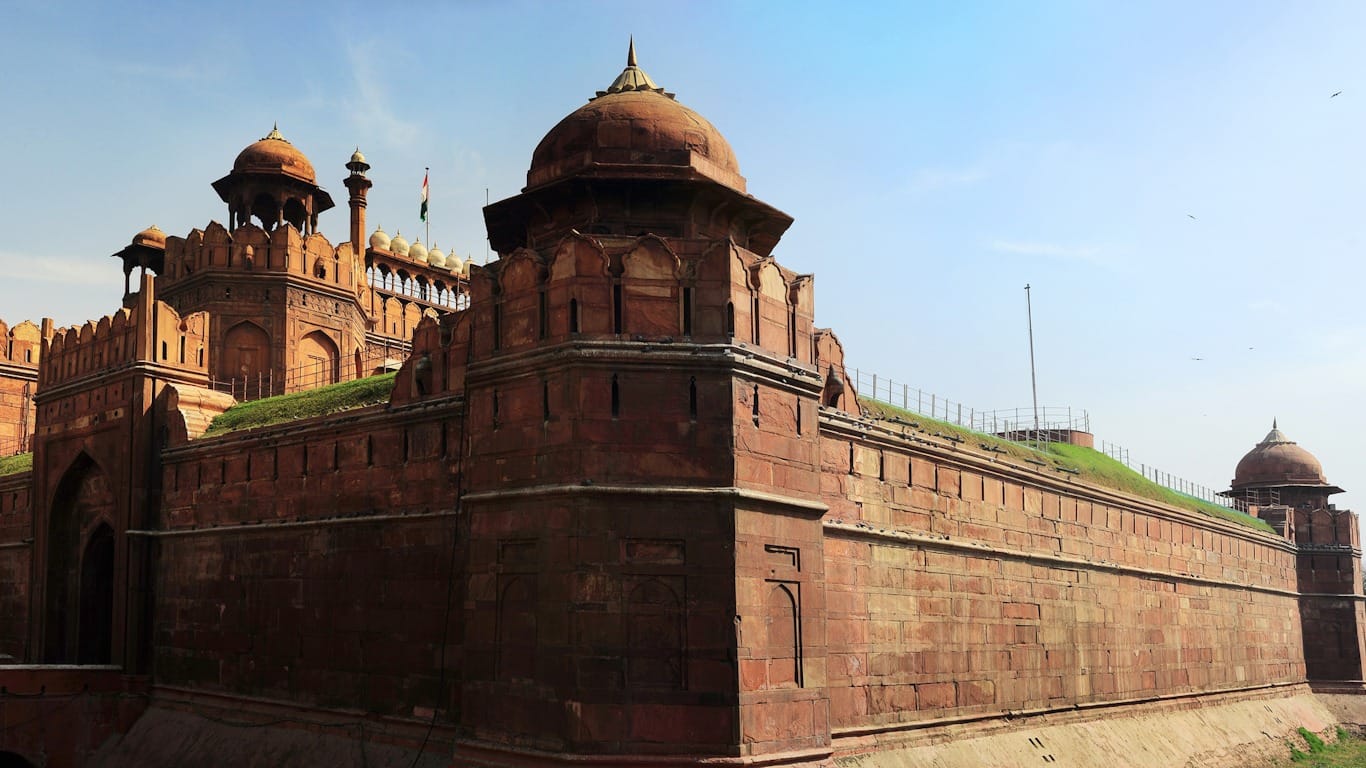
The walls of the fortress were between 16 and 33m high and its main function was to keep invaders away. The fort had two gates, the Lahore and the Delhi.
The buildings inside the fortress
Lahore Gate: is the main entrance to the complex and leads you to the Chatta Chowk. This is where Prime Minister Jawaharlal Nehru raised the first Tricolor flag after independence in 1947.
Chatta Chowk: just as you enter, you will come across this covered market, formerly dedicated to the court and where the most exclusive tailors and merchants were located. Today it is a bazaar full of stores with handicrafts and souvenirs for visitors and the road that leads you to the heart of the complex.
Naqqar khana (the House of the Drum): This building was dedicated to the practice of music and from where the musicians announced the arrival of the emperor. Today this building houses the War Museum which houses weapons of warfare from the time of the Mughals.
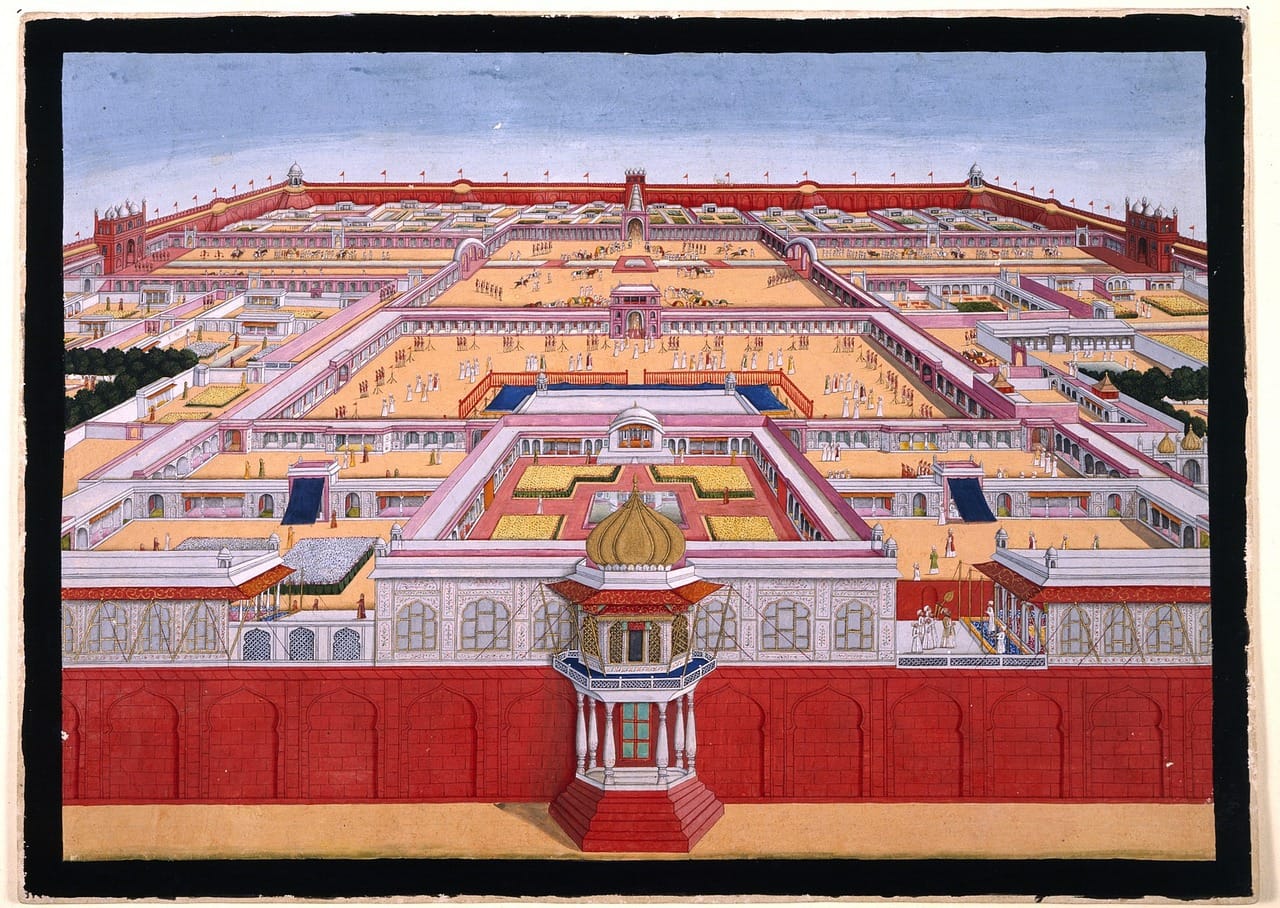
Khas Marhal (the main palace): the emperor's private residence. Its design replicates paradise according to the Koran. Mumtaz Mahal, Shah's favorite wife, had her own palace, named after her, and this building housed the Red Fort Archaeological Museum in Delhi for several years. The rest of the emperor's harem was housed in the Rang Mahal.
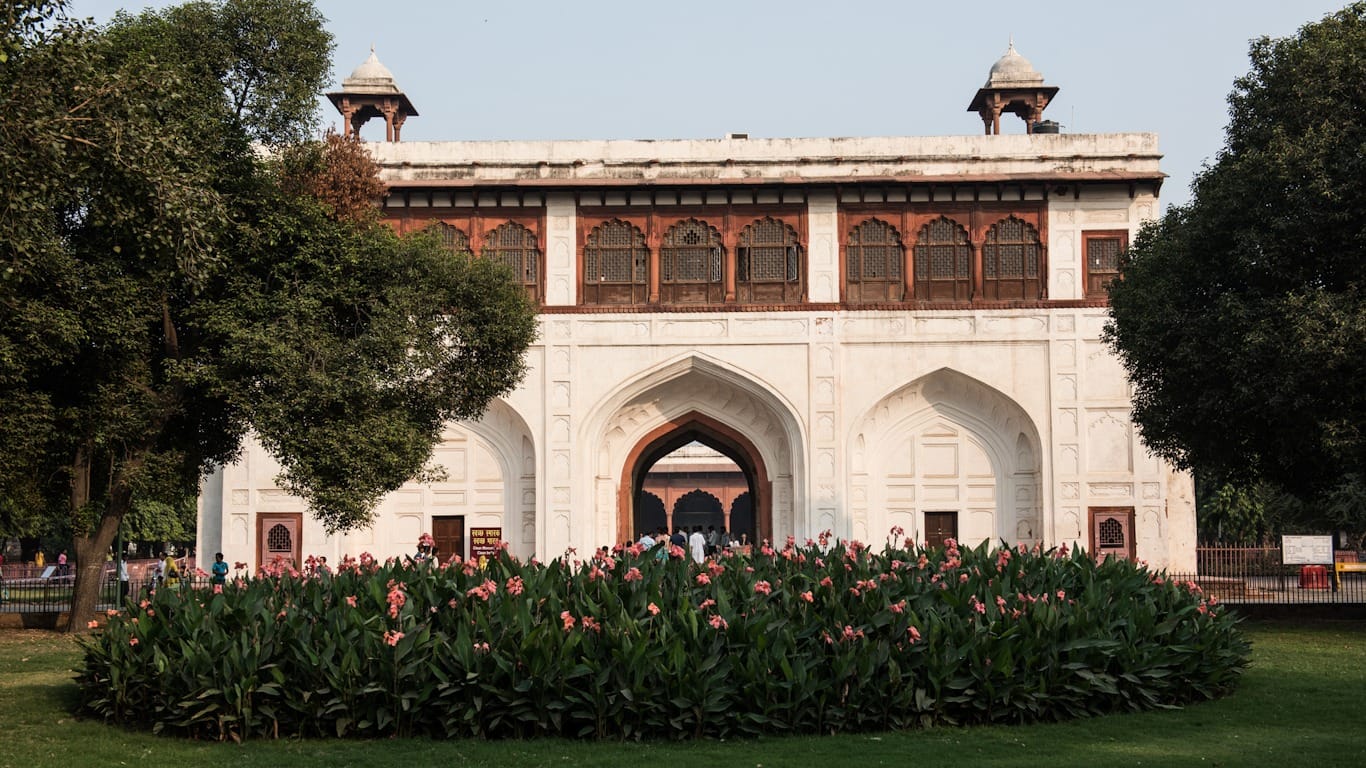
Diwan-i-Am (the public audience hall): Here, seated on his white marble throne, the emperor listened to his subjects.
Diwan-i-Khas (the private audience hall): was the place where the emperor held his daily audience with the prime minister and where he met with official dignitaries.
In addition to these buildings, the complex also had the Mati Masjid (Pearl Mosque), the Hamman (Royal bath) and the Musaman Burj. The tower from which the emperor showed himself in public.
The evolution of the Fort
Over the years, the Red Fort has not undergone any significant renovations but has been the scene of several events that have transformed and weakened it, losing part of its buildings and original structure. The fortress witnessed the earthquake of 1719, the fire caused by Gulam Qader and was later looted by the English who demolished several structures of the complex to build military barracks.
The Red Fort in Delhi was declared UNESCO World Heritage Site in 2007.
Visiting the Red Fort in Delhi
You can visit the complex and most of the buildings inside and take pictures. If you have time, I recommend you to dedicate a whole morning to this visit as it has a lot to discover.
In addition to the general tour of the complex, every night (except Mondays) there is a sound and light show that narrates the history and evolution of the Fortress. If time permits, don't miss it!
When to visit the Red Fort
It can be visited at any time of the year, although I warn you that at the months of May to June in Delhi are very hot, and the humidity level is high.
Regarding the time of day, any time of day is good but if you want to avoid large accumulations of visitors better to visit early in the morning.
Whenever possible, avoid visiting on Sundays and holidays as the number of visitors is usually massive.
How to get to the Red Fort in Delhi
To reach by metro: the nearest stations are Chandi Chowk and Chawri Bazaar (both on the yellow line). They are at a distance of 1.6km and 1.8km respectively so the most practical way is to take a tuk tuk or cab from there.
To arrive by train: the nearest train station is Old Delhi. It is at a distance of 2.3km, it is best to take a tuk tuk or cab from there.
Another option is to take a cab or tuk tuk directly with the Ola Cabs App from your location.
Practical information about the Red Fort in Delhi
Schedule: from sunrise to sunset and from Tuesday to Sunday. Mondays are closed.
Price: 600INR for foreigners and 90INR for Indian nationals.
Camera & video: you must pay a supplement of 25 INR.
Sound and light show: 6pm every day except Monday and the price is 80INR on Saturdays, Sundays and holidays and 60INR on all other days. Children from 3-12 years old pay 30INR.
Food & beverages: food is not allowed but you can bring your own water bottle.
Prohibited: tripods are not allowed in the complex.
What to bring: comfortable clothes and shoes, a hat to protect you from the sun, and don't forget your camera or cell phone!
Guided tour: guides are always available at the entrance and for a small fee you can learn more about the history of the place.
Tips: Given the history of this place, I recommend that you take the tour with a guide to soak up the history and make the most of the visit.
I trust that this article about Delhi's Red Fort be useful for you and enjoy your visit to the fullest 🙂

Leave a Reply