
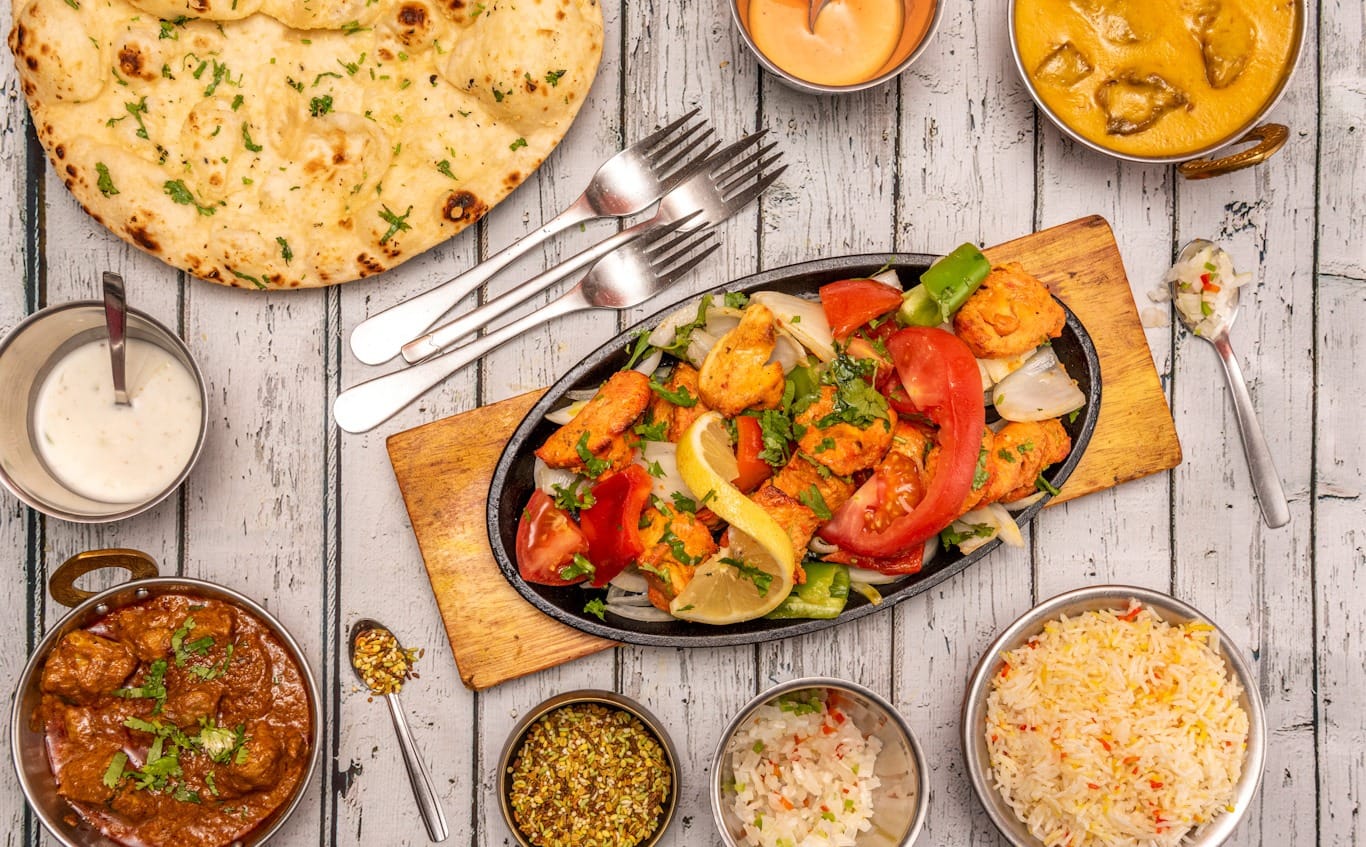
Indian cuisine is famous around the world for its rich variety of flavors, spices and unique dishes. However, for those who are unfamiliar with this delicious culinary tradition, it can be overwhelming to know what to order in an Indian restaurant because of the diversity of choices available. But fear not, because today I'm going to guide you through the maze of Indian food at the restaurant.
Get ready to tell him "namaste" to an epic and balanced culinary experience.
For starters, In India they don't have the concept of starter, main course and dessert in the same way as we do in the West. In India, small portions of various dishes are eaten in combination to provide all the nutrients and flavors needed for a balanced diet (this originates from the Ayurveda).
And before continuing, please note that eating with your hands in India in India is not frowned upon and it is accepted by the standards of table etiquette and protocol.
Types of service in an Indian restaurant
The Indian restaurant experience goes beyond the food, involving the presentation of the dishes and how they are served. Here are the most common types of service in an Indian restaurant, each offering a unique experience for diners.
Buffet: abundance and variety
The buffet is a style of service in which diners serve themselves from a variety of dishes laid out on a station or table.
In an Indian restaurant, a buffet may offer a wide range of dishes, from appetizers to main dishes, harnesses and desserts in addition to live stations of some dishes. This allows diners to sample a wide variety of flavors and dishes in a single meal. Buffets are popular in Indian restaurants because of the rich diversity of the cuisine and the opportunity to experience a true culinary feast.
Thali: A complete sample
The thali is a complete and balanced dining experience that features a selection of dishes served in small portions on a platter. This format allows diners to taste a variety of flavors and textures in one dish. A thali typical includes rice, bread, various vegetarian dishes, appetizers, side dishes, legumes and dessert. Each component is placed in small compartments on the tray. The thali is an excellent choice for those who want to experience a traditional Indian meal in a complete way. Each region has its own thali with different dishes.
Tasting Menu: a culinary experience
The tasting menu is a refined experience in which diners enjoy a series of dishes selected by the chef. Each dish is a small portion that highlights unique flavors and culinary techniques. In an Indian restaurant, a tasting menu can present a combination of emblematic dishes and creative interpretations of traditional cuisine. This option is ideal for food lovers who wish to explore a wide range of authentic flavors in total balance.
A la Carte: to your liking
The "a la carte" service allows diners to choose individual dishes from the menu. This option provides flexibility to customize your dining experience according to your preferences but in an Indian restaurant it can be a bit chaotic if you are not familiar with the typology of the dishes and are not sure what to order in an Indian restaurant. I will give you my tips later in the article to make your choices a success.
Each type of service at an Indian restaurant offers a unique experience for diners, from the convenience and variety of the buffet to the sophistication of the tasting menu. Consider your preferences and the style of food you wish to enjoy when choosing the type of service that best suits your occasion and taste.
A la carte: What to order in an Indian restaurant
I will take you on a tour through the different categories of an Indian menu to familiarize you with their preparations and types of typical dishes.
Appetizers
Start your Indian dining experience with some tasty appetizers or snacks. Here are some popular choices:
Papadum: Very thin (wafer) and crispy bread. It is usually eaten as an appetizer with a selection of sauces and chutneys.
Samosas: Triangles of dough filled with potatoes, peas and spices, although an infinite number of ingredients can be added.
Pakoras: Vegetable pieces (or even paneer, chicken, fish) fried in chickpea flour batter.
Paneer Tikka: Cheese cubes paneer marinated and roasted in the tandoor oven.
Indian breads
Indian breads are an essential part of Indian food, they complement and absorb the rich flavors of the main dishes.
Naan: This flatbread baking in the tandoor is fluffy on the inside and slightly crispy on the outside. You can enjoy it on its own or use it to accompany your favorite curries. There is Naan with butter, garlic naan, with cheese, with mint, with dried fruits...
Roti: A thinner and softer whole wheat bread that is cooked in a frying pan. It is a healthier option that perfectly complements legume dishes and any stew or curry.
Paratha: Similar to roti, but richer in calories (and flavor) and often filled with spices, potatoes, vegetables or paneer. It is a more complete bread that is also eaten for breakfast.
Laccha Paratha: is a bread with many layers (like puff pastry) that is made in the pan and is both juicy and crunchy. The best ones are the ones from Kerala 🙂
RECOMMENDATION: the breads do not order all of them at the beginning or at once. In India, you order them throughout the meal as they are much better freshly made and also in India they are ordered as you eat them.
Garnishes
Side dishes are the ideal companion to your main dishes. Don't forget to try the following options:
Raita: A refreshing yogurt mixed with cucumber, tomato, cilantro and spices. Its mild flavor counteracts spicy flavors and soothes the palate.
Achar (pickles): Condiments and pickles that vary in flavor and spiciness. Add a touch of bold and somewhat astringent flavor to your food. The most popular ones are mango and lime.
Chutneys: Spicy and sweet and sour sauces made from fruits, herbs and spices. They can be made with a variety of ingredients such as mango, tomato, even cilantro or tamarind.
Rice Basmati: A very light and fragrant steamed rice ideal to accompany any Indian preparation.
Legumes and Stews
Legumes are an important pillar in the Indian diet due to its nutritional value and versatility. Discover some of these options and stop doubting what to order in an Indian restaurant:
Dal yellow: Lentil stew is a comforting blend of lentils cooked with spices. Can be simple or enriched with additional flavors.
Dal Makhani: A stew of black lentils and red beans cooked in a sauce of tomato, onion, spices and fresh cream. This dish is a spectacle of flavor.
Chana Masala: A plate of chickpeas in a thick tomato and spice sauce. It is a tasty dish full of protein.
Rajma: A curry of red beans cooked in a tomato and spice sauce. It is an iconic North Indian dish.
Main Dishes
Main dishes in an Indian restaurant often served with rice or bread.
Here are some options to consider:
Meat, fish or seafood curry
These iconic dishes are a burst of flavors, thanks to the combination of spices and herbs that are mixed in its rich sauce. You can adjust the level of spiciness according to your preference. The most popular are chicken curryof lamb, shrimp curry and fish.
Vegetable curry
Vegetable preparations in India are fun and full of flavor. The most popular vegetable curries (vegetables in sauce) are:
- Palak Paneer: creamy spinach with spices and cheese
- Malai kofta: vegetable dumplings with a sauce made with walnuts and cream
- Aloo Gobi: a classic cauliflower and potato based curry with fragrant spices
- Pumpkin curry: silky pumpkin cooked in a spicy curry
Vegetables without sauce
- Bhindi Fry: Okra sautéed with spices and seasonings until crispy and golden brown.
- Tawa VegetablesA blend of vegetables roasted on a hot griddle with spices and herbs. The direct heat enhances the natural flavors.
- Jeera AlooPotatoes sautéed with cumin seeds and spices until golden brown and full of flavor.
Rice
Biryani: : The biryani is a spectacle of aromatic rice cooked with layers of meat or vegetables and a blend of spices. Each bite is a feast of flavors and textures. It is prepared in earthenware vessels sealed with a flour dough so that the flavors are not lost.
Pulao: The pulao is a rice dish in which all the ingredients are cooked together with the rice. It is a very subtle and elegant dish with less intense flavors than in the Biryani.
Tandoor
It is one of the healthiest and lightest preparations of Indian gastronomy. It is cooked in the oven Tandoor made with clay, which allows the food to retain its juices and all its flavor. The star ingredients are chicken, lamb kebab, paneer with vegetables (bread naan is also made in this oven).
Desserts
The final sweet touch is almost mandatory as Indian food would not be complete without its indulgent desserts. Some irresistible options are:
Gulab Jamun: Fried balls dipped in a sweet syrup perfumed with cardamom and rose water.
Kheer: An aromatic rice pudding with cardamom, nuts and raisins.
Jalebi: My favorite sweet made with flour, fried in ghee and bathed in fragrant cardamom and saffron syrup.
Kulfi: The creamy Indian ice cream that has conquered the palates of half the world.
Beverages
Refreshing and aromatic, Indian drinks are as varied as the dishes of this gastronomy. Accompany your meal with these options:
Lassi: Enjoy a lassi, either sweet or savory. The lassi sweet is made with yogurt, water, sugar and fresh fruit can be added (the most popular one is the lassi ,), while the lassi salty incorporates spices such as cumin and Himalayan or black salt.
Buttermilk , Chaas Masala: A very refreshing and light dairy drink that helps with the digestion process. I share the Chaas Masala recipe.
Masala Chai: The chai with spices is the most popular Indian tea in North India. It is made with a mixture of black tea, spices such as cardamom and cinnamon, ginger, milk and sugar. It is an aromatic delight that warms the soul. Perfect at any time. Do not miss the Masala Chai recipe to do it at home.
Tips that will lead you to success
If you want to enjoy your experience to the fullest and want to know what to order in an Indian restaurant, consider these tips:
Spiciness Scale
If you are in an Indian restaurant anywhere other than India: If you are not used to spicy food, feel free to order your dishes with less spice. The staff will be happy to adjust the levels according to your preferences. I also warn you that if you like your food SPICY, it is best to indicate this as well since Chefs often leave the spiciness level low so that most diners will like it.
If you are in a restaurant in India: Always let them know the level of spiciness you want as in India they don't skimp on spiciness. Moreover, if you can't tolerate it well...ask for the dish without spiciness although some preparations will not be possible but they can recommend the most suitable dishes for you according to their menu.
Order with your head and not just your stomach (what to order in an Indian restaurant).
When you open the menu of an Indian restaurant your taste buds will start to salivate, you will find yourself with a terrible hunger and you will feel able to eat without limits... at that moment use your head. You can't try everything in one sitting so bring out your rational side and order portions according to the number of diners (you should ask the restaurant staff as portions vary greatly in each establishment).
If what you ask for is not enough...you can always ask for more.
Variety and balance
Because it is a cuisine rich in nutrients and with a great intensity of flavors, it is also a very nutrient-dense and flavor-intensive cuisine,it is important to seek a certain balance in the selection of dishes. Even if you are a legume lover, maybe it is not the best option to choose 3 types of lentils and chickpeas because you will have a very heavy digestion and you will be depriving yourself of tasting many other delicacies... but the diner is the one who rules, so if you want a legume menu, leave my advice behind and go ahead!
The ideal would be to combine legumes, vegetables, meat-fish, rice and something sweet.
Breads always warm
Order the bread as you consume it so that it is freshly baked.This is very important!
Regional Diversity
Indian cuisine varies greatly from region to region. Experience dishes from different parts of India to appreciate its diversity and enjoy a more complete gastronomic journey.. Indian gastronomy is a never-ending story...
Ask the Staff (to know what to order in an Indian restaurant)
If you are undecided or have questions about the letter, the restaurant staff will be happy to guide you and provide recommendations according to your tastes.
Adventure on the plate
Try new flavors and preparations without fear. Indian cuisine is very varied both in terms of ingredients as well as in types of preparation. If this gastronomy conquers you...this will be a very long adventure.
And if you want to venture to cook at home, do not miss my section of INDIAN RECIPES.
The best Indian restaurants
Now that you are an expert in the typical Indian dishes and you are a master when it's time to order in an Indian restaurant, here are my recommendations of the best Indian restaurants in several Spanish cities so you can put what you have learned to the test 🙂
The best Indian restaurants in Barcelona
The best Indian restaurants in Madrid
The best Indian restaurants in Tarragona
I hope this detailed guide will provide you with a solid foundation to explore Indian food with confidence and to know what to order in an Indian restaurant.
Have an amazing and memorable feast!
Leave me your comments and/or questions! I read you


Leave a Reply to Ranjan Cancel reply